Tag: travel

  • wanting a different world (or: on dorothy day)

    wanting a different world (or: on dorothy day)

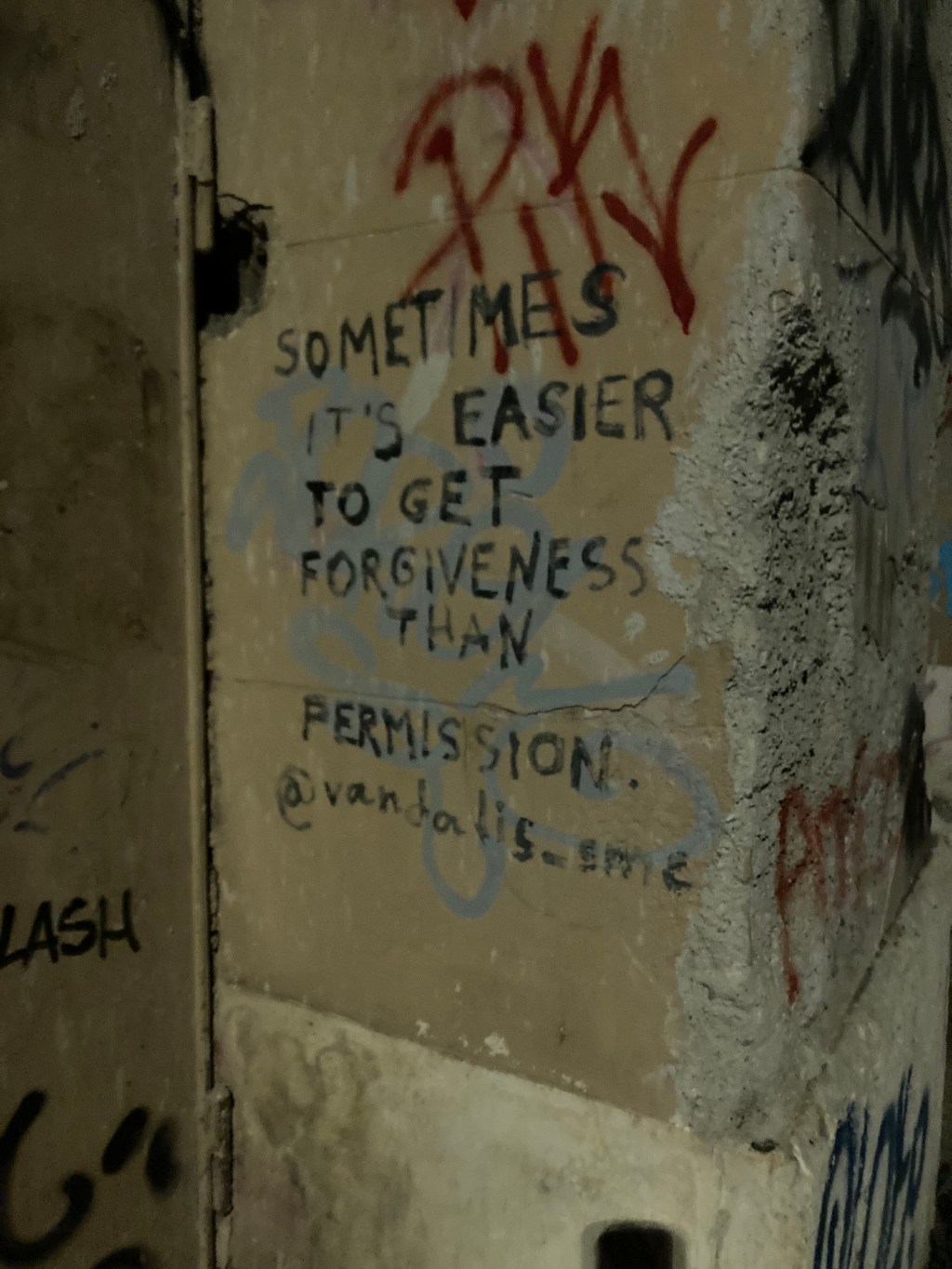
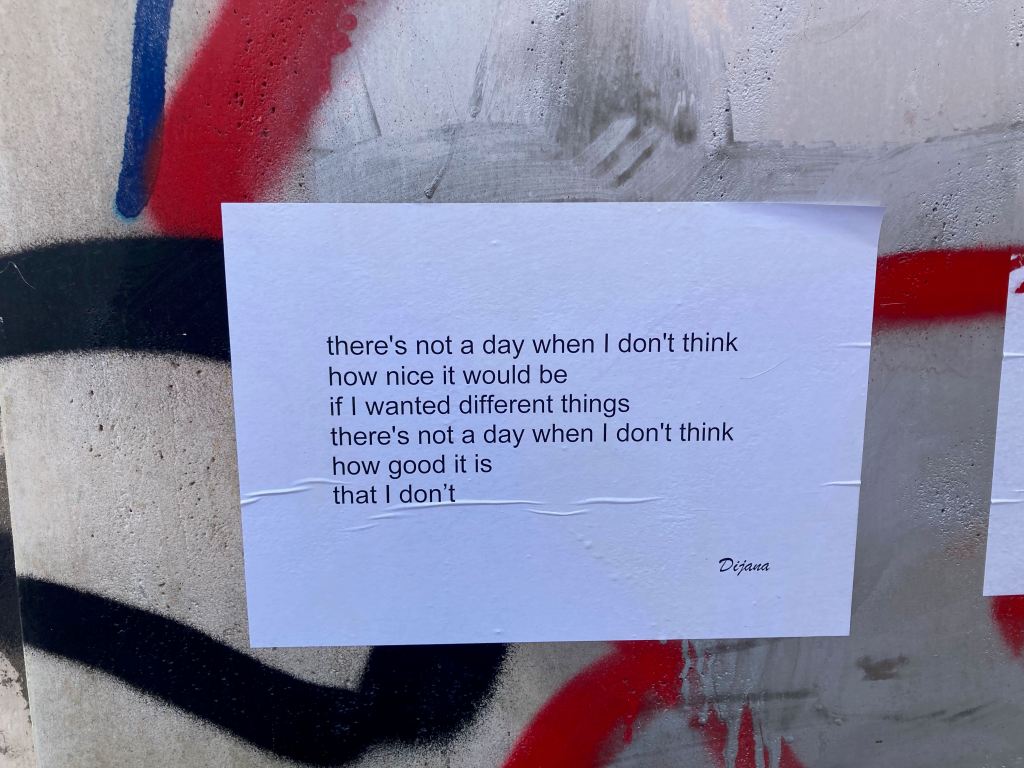
    “There’s not a day when I don’t think/how nice it would be/if I wanted different things/there’s not a day when I don’t think/how good it is/that I don’t.” –Dijana

    I started thinking about this in my essay on Perfect Days, which is about the alternative hedonism presented by the movie, a vision of life in which commodities are not the center. This picture of some graffiti from my time in Italy reminded me of a central, difficult question about wanting things and what happens when you want things that are unavailable or not easily acquired by money.

    We can want things, commodities, as they present us with visions of ourselves as cool or complete or as somehow staving off the reality of finitude. I’m talking here about the things we don’t necessarily need or those objects that fill us with rapturous visions of who we could be rather than satisfying, say, our nutritional needs or our spiritual desires. We can also want things that are not things but are really forms of life: like better relationships; clean air; more kindness; health and happiness for our neighbors. But these things cannot be solved by buying things.

    It’s easier to want the thing rather than to want forms of life.

    This is why, as Todd McGowan argues, we in some ways like and want capitalism, because it arises from and satisfies things we as humans struggle with and desire. But like Dijana is saying in my photo, things start to get a little difficult when you stop wanting things and start wanting life. (I’ll refer you back to my blog title; less labor, more life!)

    I’ve been thinking about this even more now, reading the memoirs and diaries of Dorothy Day, having become interested in her as a result of Zena Hitz’s fabulous Lost in Thought: The Hidden Pleasures of Intellectual Life. I have always been drawn to the stories of those who follow the difficult path of living what they believe in. And in our moment, it is more necessary than ever, even though Day may roll her eyes at me saying that. She recognized that all moments in history are crisis; not just ours.
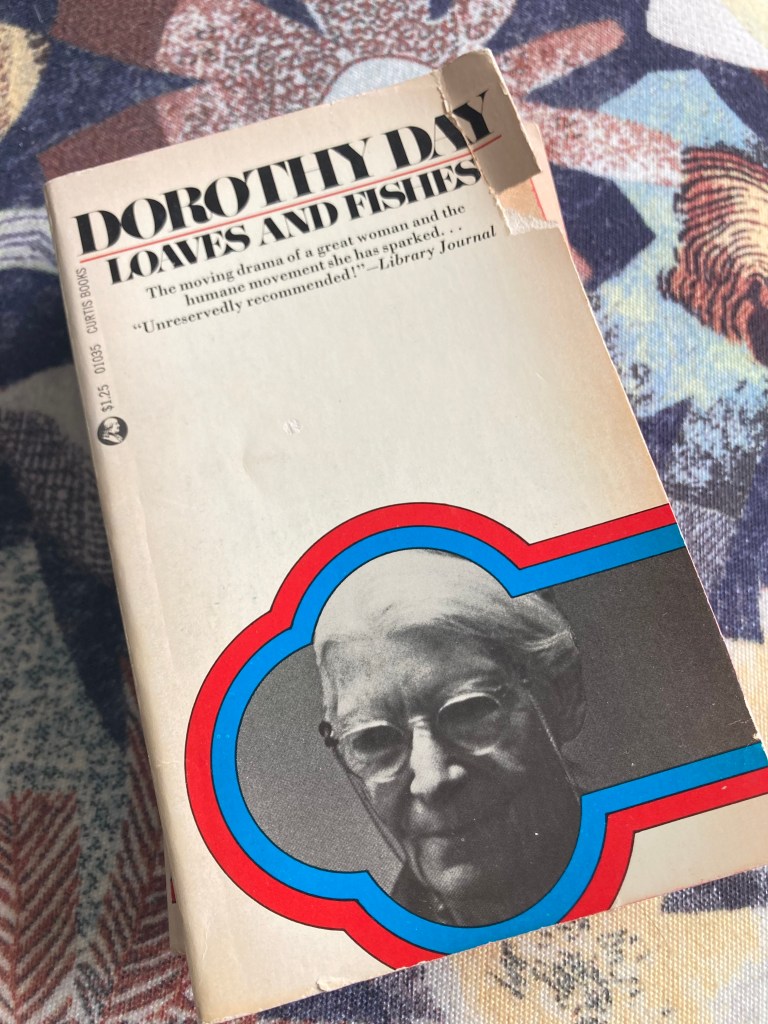
    My battered, Free Little Library copy of Dorothy Day’s Loaves and Fishes.

    The world looks very different if our words and lives come closer into alignment and Dorothy Day’s life demonstrates this powerfully. Her biography is easily accessible, but the two salient details for me are this: that a free, seeking youth lead her to communism and then to Catholicism. Becoming Catholic intensified her commitment to issues of social justice, especially poverty, labor struggles, and anti-war actions. Her life was a practice of living her values fully, in voluntary poverty, caring for the poor, tax refusals, and anti-war protests.

    For instance, Day writes an explanation for refusing to pay income tax in Loaves and Fishes, that clarifies .85 on the dollar pays for the military-industrial complex in the US. That was in 1963 when the book was published; I am afraid to confirm my intuition that this number is much higher. After all, in the US when services are cut, that money is almost always directed toward the death machine. By earning less money and consuming less, as the Catholic Workers set out to do, there can be a reduction in complicity with war.

    The point is not that we all go out and become Dorothy Day; some of us may become like her but Day would encourage us to work with our desires and our skills toward that vision we have and in community with those who sustain us. Catholicism and anti-capitalist, anti-war politics were central to her vision; her skills were writing, speaking, and caring. For example, I loved parts of being a union organizer; mostly I found it wrecked me every day and I did not have the constitution for it. Instead, I write about how wonderful unions can be and will always participate in one should I have the chance.

    This is a principle shared by many of the feminists I read and teach but particularly the Milan Women: following our desire can remake the world. Day emphasized freedom just as much as the Milan Women; it is one of the most compelling aspects of her philosophy. But in a world where our desires are broken and deformed by the market on the one side and the state on the other, what are we supposed to do? How do we find our way forward? I say “we” here because I feel I have been lost in consumer hell myself. I feel like I am becoming aware of how my desires for feminism, love, happiness, community, a better world have been funneled into the only thing available: buying shit!

    Across all her work, Day desired, more than worldly goods, a world in which every person has freedom, dignity, care, food, and housing. I find this single-mindedness, something Zena Hitz wrote about recently, so moving. The Catholic concept of vocation is a powerful one. I am not Catholic, but I still, in my 30s, wonder what my vocation is. What is the thing I am single minded about? Feminism? Labor issues? Writing and teaching as many people as possible to tell their stories? Writing novels and essays? The answer, after all, cannot be answered by a force of will.

    I think many of us wonder how we can use their special gifts in the world–some of us are even still looking for those gifts, doubting them, chasing them away, hiding if they come knocking. We’ve been taught to love other things besides ourselves and each other, something like Dorothy Day’s life (as she tells us) has revealed to me, loud and clear.

    Day’s life, and her life-writing, were so unique, so powerful, I can feel her coming through the pages of her books. To be that alive, to seek life out in the presence of suffering others, amazes me and reflects my life back to me in unsettling ways. The daily courage her life required, well, encourages me. Dorothy Day did not claim the mantle of feminism for herself, but her picture now belongs in my pantheon of spiritual advisers.
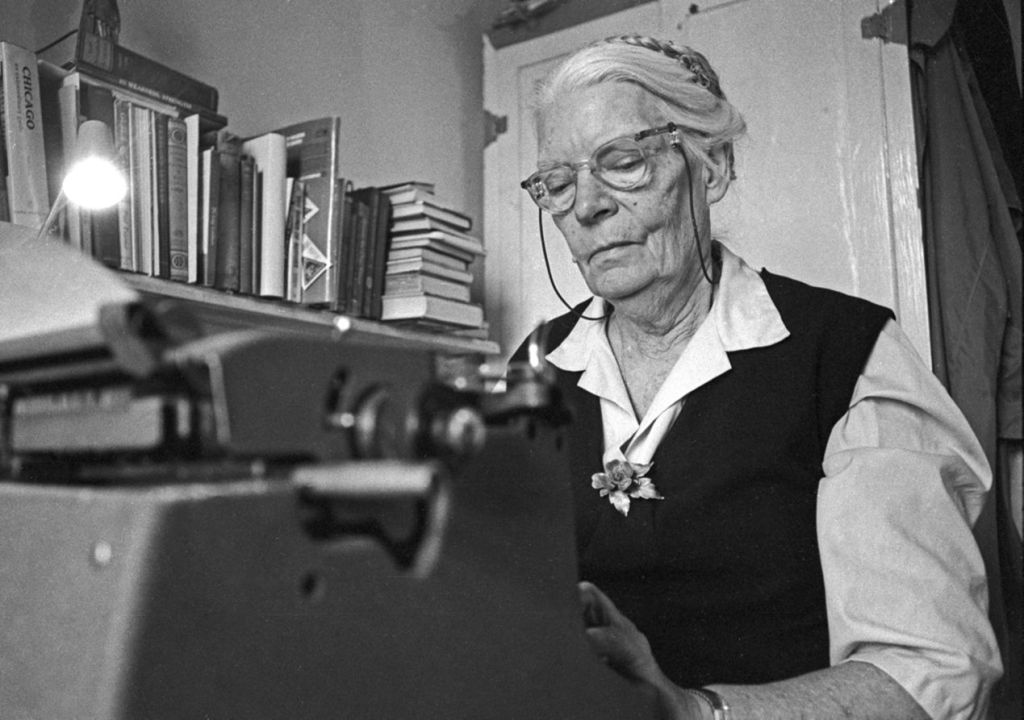
    Day at her typewriter. Credit: Bob Fitch. Source: U.S. Catholic.
  • blossoms and beauty in tokyo

    blossoms and beauty in tokyo

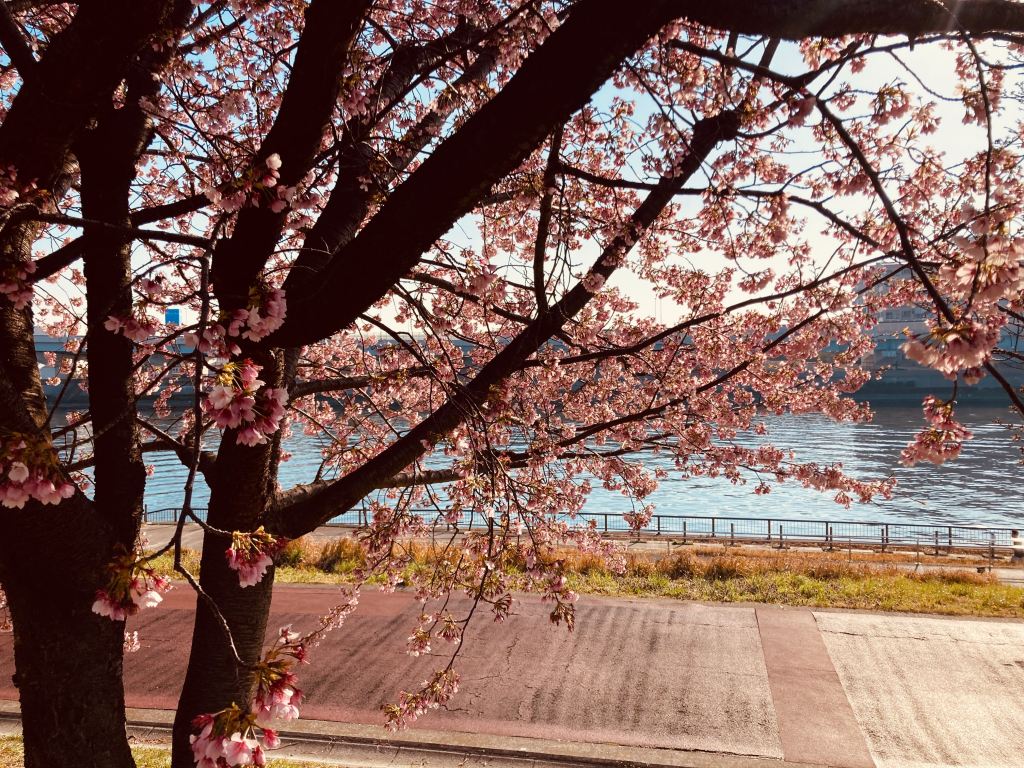
    I spent last week in Tokyo, soaking in the cherry and plum blossoms, as well as the public baths. I rested in gardens and hurried to catch the packed subway trains. I wandered along rivers and sat in cafes watching people go by.

    It was my last stretch of time without having to report to a job, though the job loomed at the end, quite like it might when you take a “normal” vacation. There’s always a sense of finite time. My experience of Tokyo this time was less full of possibility and more bittersweet than it was a year ago, precisely for that reason.

    But I loved my time there, just as I did the first time. I loved the unfamiliar sounds, both the songs and language. I now live in a small town (it calls itself a city, but I beg to differ) and so I do not hear the clatter of train cars or the announcers’ voices or the mix of many languages at any given time. So many different people come to Tokyo from all over the world, even from within Japan itself, so there’s also a real diversity of people moving through the city.

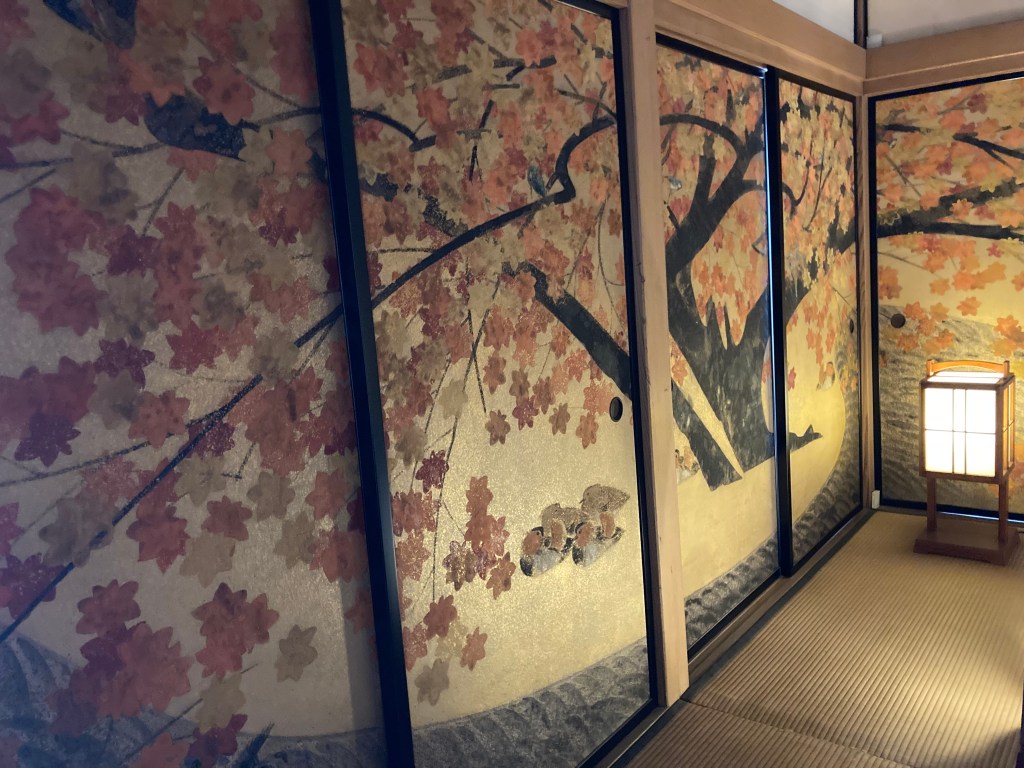
    I visited my third crown jewel garden, Kairakuen in Mito, about a two hour train ride from Tokyo. The garden’s name references a particular kind of pleasure and ease. This philosophical aspect of the garden felt like a natural conclusion to my time off, as both were something I thought in sustainable and nourishing forms. Much of the pleasure we have access to on a daily basis is not…healthy? It’s at least not sustainable, as we try to consume our way out of loneliness and mortality and lovelessness and anger. Instead, Kairakuen was a place for everyone to retreat to rest in the beauty of the plum trees and the exceptionally beautiful Koubountei, a three floor residence with rooms painted in different designs. Kairakuen, of the three crown jewels, was always treated as a public space rather than the domain of the wealthy.

    momiji (maple) room in Kobountei

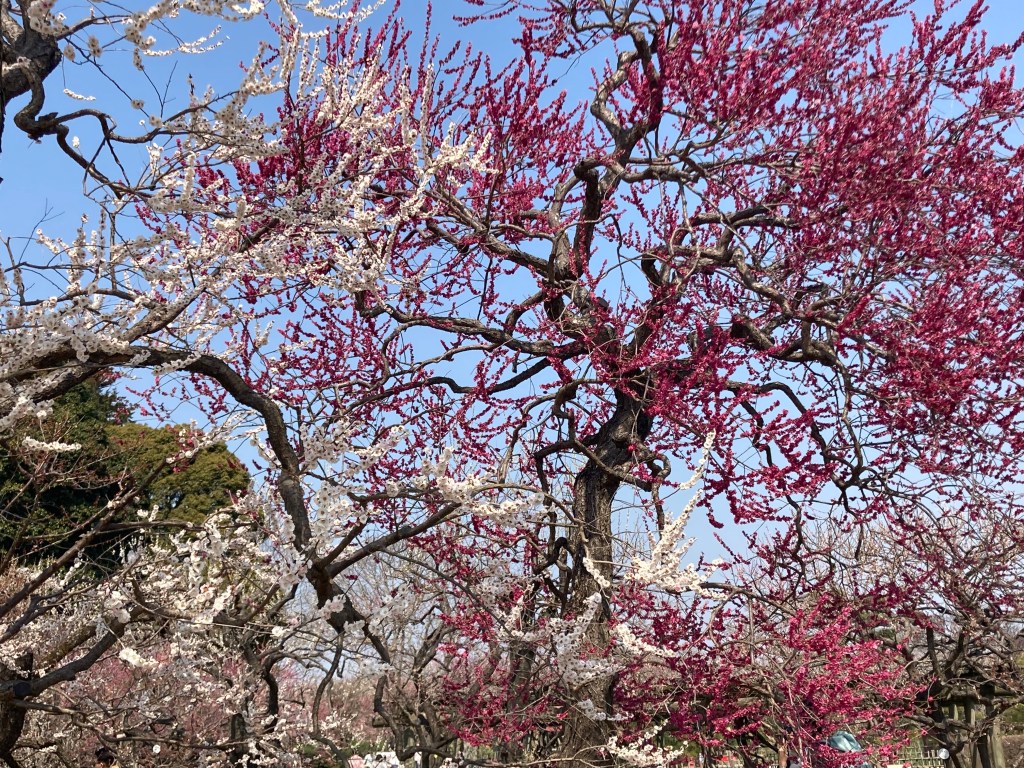
    The plum trees were still in bloom, so I wandered the plum grove multiple times, breathing in the scent of the trees. Photos can never capture smell and they fade from memory, only to be evoked in surprising ways later. (Proust taught us this, I suppose.) I was acutely aware of the impermanent nature of smell as I sat beneath the blossoms, enjoying my onigiri for the day. I enjoyed watching people show each other the blossoms, snatches of Japanese conversation floating toward me and away.

    white and fire-pink blossoms in Kairakuen

    I think the Japanese acknowledgement of the shaping relationship between people and nature is sound, much more sound than the culture I come from which views nature as valuable only for resource extraction or feelings of sublimity (these two things may be related). The Japanese garden is sometimes derided as being artificial to which the Japanese respond, rather sensibly, with “well…yeah.” Men cannot make mountains, though, in my country, they work very hard to destroy them. But in a Japanese garden, men can create mountains. Mountains can be made with carefully placed stones that evoke legend and symbolism. Ponds can stand for lakes, and the barest of fields suddenly becomes the plains. The Japanese gardens are worlds created to satisfy a need for beauty and one that engages all of our senses and faculties.

    Imagination is where beauty begins.

    I haven’t been working on any writing in the last two weeks, even this blog was a casualty of my travels and my job starting. But this problem of imagination and beauty, of how we restore our souls, especially when we don’t have money or means, interests me very much. That problem of restoration and beauty is the center of a story I’ve been working on for a couple of years about tiredness, inspired by Byung-Chul Han’s The Burnout Society. (That book actually saved my life.) Maybe I’ll get back to it since I’ve returned from trip, full of sustaining images and memories to get me through the workday.

  • My Career Break

    My Career Break

    Graffiti I saw in Rome on my way to the airport.

    We’re all fed up with work.

    It’s a mood, a structure of feeling, that all of us look at waged work and think, “yuck.” But it’s difficult to act on that mood. Who can really leave work behind? I think of Rental Person Who Does Nothing and the anonymous author of “Tang Ping,” Luo Huazhong, who works two months a year and has monthly costs of 200 yuan. Both of them left work behind, but in different ways.

    I, too, was fed up with work. It was somehow both soul-crushingly boring and kept me just busy enough that I stressed constantly. I needed an off-ramp, quickly. My partner had just taken a year to get a degree and leave customer service work entirely. He finished his degree and got a job in Montana, one that would cover rent entirely. Our roles swapped: I would quit my own job. I turned in my notice, moved out of the North Carolina apartment, and flew to Montana after a couple of months.

    There was very little information about taking a career break when I started, with the exception of Julie de Vivre’s archive (which I highly recommend). I read about travel writers who were digital nomads but had financed themselves through sold houses and in demand careers. This, obviously, was not an option for me. I read about people who lived in communities that helped them reduce their spending considerably and so their career breaks were “permanent.” These people invariably had gardens that required a lot of work. I read about someone who cashed out $190,000 in savings. I read about Luo Huazhong and his 200 yuan a day and knew I could never do that, either.

    But I did think I could manage a year on what I had saved without being wealthy, gardening or eating tofu and rice for every meal. It turns out I was right, thanks to my partner covering rent when I was in Montana. (I could have contributed toward rent, but he refused.) I covered all my other expenses which included travel to Japan and Italy, as well as travels to see my family. (Recapped here.)

    As of right now, I have about $10,000 of the $24,000 that I started with. My one-year mark will be on March 31, 2025. I’m being transparent about this because, before I started, I felt doomed to work forever, parceling out my time in 1-2 week stints of vacation time that feels so oppressive. I used to think you had to be wealthy to take this much time off of work. But it’s more about assessing how much you need to live on and how much you’re willing to give up for the freedom.

    I haven’t been entirely work free. I finished writing my book (though I haven’t received any money from it) and taught a couple of classes at Hugo House for Writers in the past year. I have done free book reviewing for a few sites I admire. I published a couple of paid essays. I have also been working on multiple book projects that I enjoy and hope to publish in the next year or so. These are all things I have enjoyed doing and took on willingly. Taking a break from work let me focus on things I really enjoy instead of having to cram those things into the tired hours around a commute and office stay. I used to have a 1.5 hour commute (1 hour if the traffic wasn’t bad) each way to work, meaning I went to the gym at 5 AM to ensure I fit it in, and then had to work 8 to 5. I would get home after 6 and have no energy for loving on my mammals, my partner and our two dogs, or for doing things I wanted to. I was completely drained.

    Consider my day now. I start each day with coffee and work on one or more of my writing projects. My partner gets up and one of us makes a second cup of coffee for all. (Even the dog. Kidding!) Then I go to the gym, come home, take care of the dog, and make my lunch. After lunch, I do some household stuff, then I take a nap, especially if my gym session is particularly heavy. Then I’ll study one of my two languages, Italian or Japanese. I make dinner some nights, my partner makes dinner the other nights. TV before bed. And then I start all over again. On a week to week basis, my partner and I go to the hot springs in nearby Boulder. That’s our big adventure. If this sounds at all boring to you, rest assured, this is the perfect life for me. It is a nourishing routine, doing things I love, and not having to suffer 8 hours a day for someone else’s profit.

    My initial concern about taking a career break was money. How would I survive!? But now my concern is: how can I go back to work after this unparalleled stint of freedom? How will I survive having to crush myself down small again to fit into a work environment?

    In reading about career breaks and their endings, the key is to learn how to “sell” your time off to employers as a bonus. This means thinking of your career break as a time in which you gained skills that you can sell in the marketplace. Apparently, my Japan trip wasn’t an enjoyable encounter with a culture that has long fascinated me but an upskilling in intercultural exchange and soft peoples kills. This annoys me. Not everything we do, as humans, needs to be folded into work or seen as job training.

    My time off, frankly, isn’t an employer’s business. It is deeply disturbing to me that, as a culture, we give so much power to prospective employers who can demand information at will and whose power deforms us into performing creatures who will do anything for money. This is an unfreedom: it means people live their entire lives around an imaginary figure’s expectations rather than their own desires. For example, career guides recommend, in the strongest terms, that you make sure your blog is employer friendly. Don’t write anything to upset them or make them think you won’t be a good worker. You don’t, then, even have free speech in your own time; not really. Elizabeth Anderson argues in Private Government: How Employers Rule Our Lives that employers govern our lives in way that are far more insidious and damaging than some forms of state control.

    So that finds me here, on a snowy February morning, thinking about what my career break has meant to me. And I think it has, ultimately, meant reclaiming a kind of freedom. It has given me time to recover myself beyond the status of “worker.” It has also helped me recover pleasure in activities that began to feel like obligations. Writing, for example. Whether this career break becomes permanent, when I leave the career ladder for a different relationship to work, or is just a pause, I don’t know. But I’m sure I’ll see you back in the life of waged labor soon enough.

  • 2024 in Review

    2024 in Review

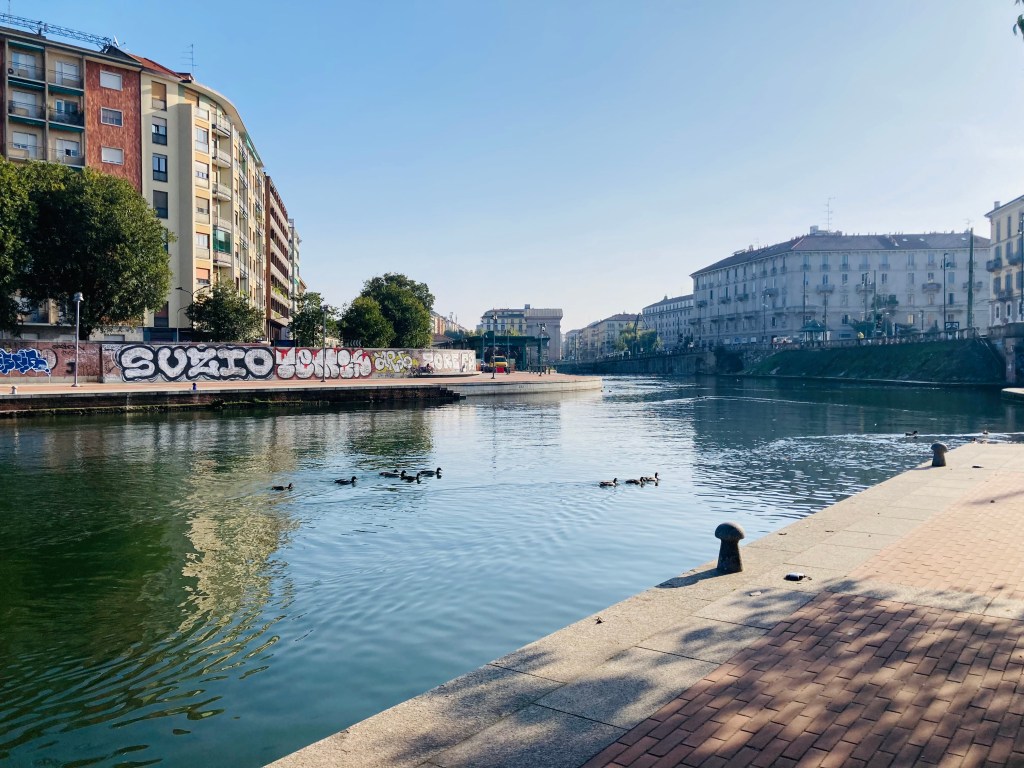
    Navigli District, Milan

    In March of 2024, I left my job in the university.

    I had major burnout. I had been cycling from burn out to burn out, (read: emotional implosion to emotional implosion) for five years by the time I finally left. I did not have a job lined up but I had roughly $24,000 in savings from jobs, my personal retirement, and a random cash account that I kept to catch travel money. The discourse in the US is to build your entire life around funding retirement and keeping health insurance. But I couldn’t do it.

    I needed a break.

    I’m not quite at the one-year mark of my sabbatical yet, but I wanted to reflect on that period, from March 31st until now, a period of my life not defined by work or my earning potential. I have been working since I was fifteen or sixteen and basically worried about money since then. This is terrible! I won’t say I haven’t been worried about money as I worked. It is hilarious how many times my partner told me to put away the resume because I would be just fine. Anyway, here’s to the year in review.

    japan: april-may 2024

    In October of the previous year, I booked a 40 day trip to Japan, fully intent on taking my vacation time and then some in order to go on this trip. I had not been planning to leave my job at that point. But in November of 2023, I decided to leave my job so I could take this trip without limits.

    I made my way from Tokyo to Nagoya to Kanazawa to Osaka to Kyoto to Hiroshima to Beppu to Imabari to Takamatsu to Okayama back to Tokyo to fly home. Phew! I ran out of breath just typing all of that. I want to do a more extensive write-up of my trip later. (I do have an essay about my experience coming out in the first issue of SOLO Travel Mag, so check it out!) But I will mention 2 things that were life-changing for me.

    First, sento. I had been determined to find tattoo-friendly onsen during my time in Japan only to find out about their more welcoming, far more plentiful cousin, the sento. It’s a public bath house with a variety of features: hot baths, cold baths, medicinal baths, saunas, etc. It was the place where I got to interact with Japanese people on a daily basis and they were, without fail, friendly to me. We even managed some hilarious conversations with what little of the other’s language we had. One woman in Osaka was thrilled that I had discovered sento. I went to a sento multiple times a week because they were so affordable (anywhere from 400-500 yen) and they restored my body after walking 10+ miles most days.

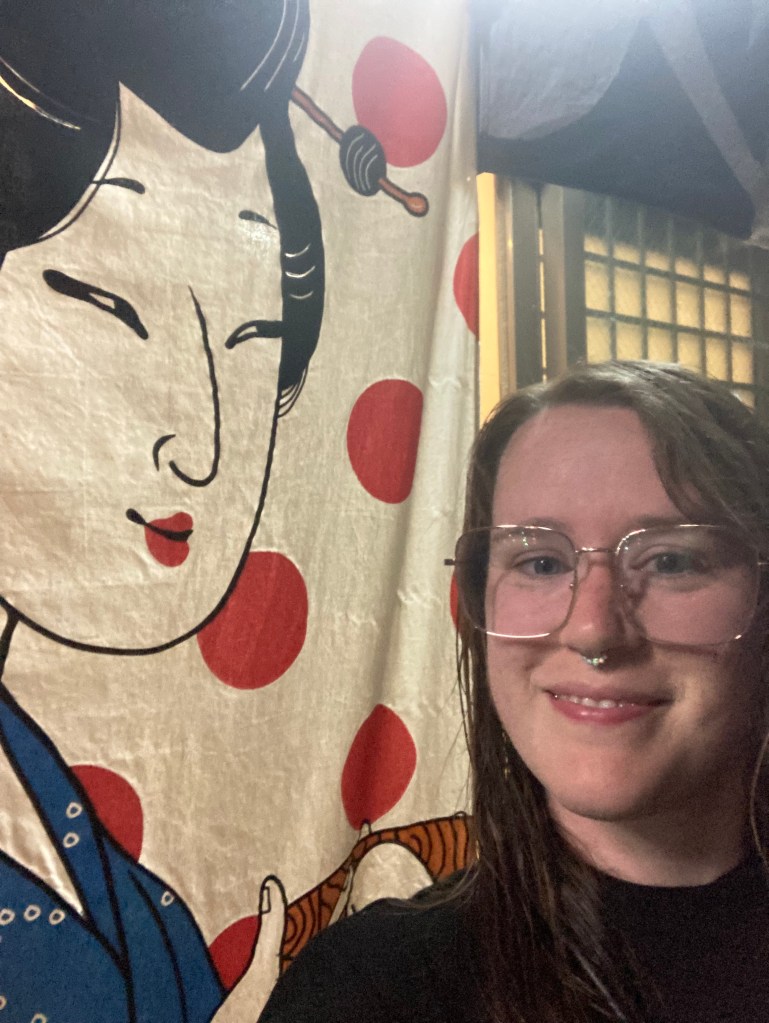
    me looking like a happy nerd after my sento time in Hiroshima.

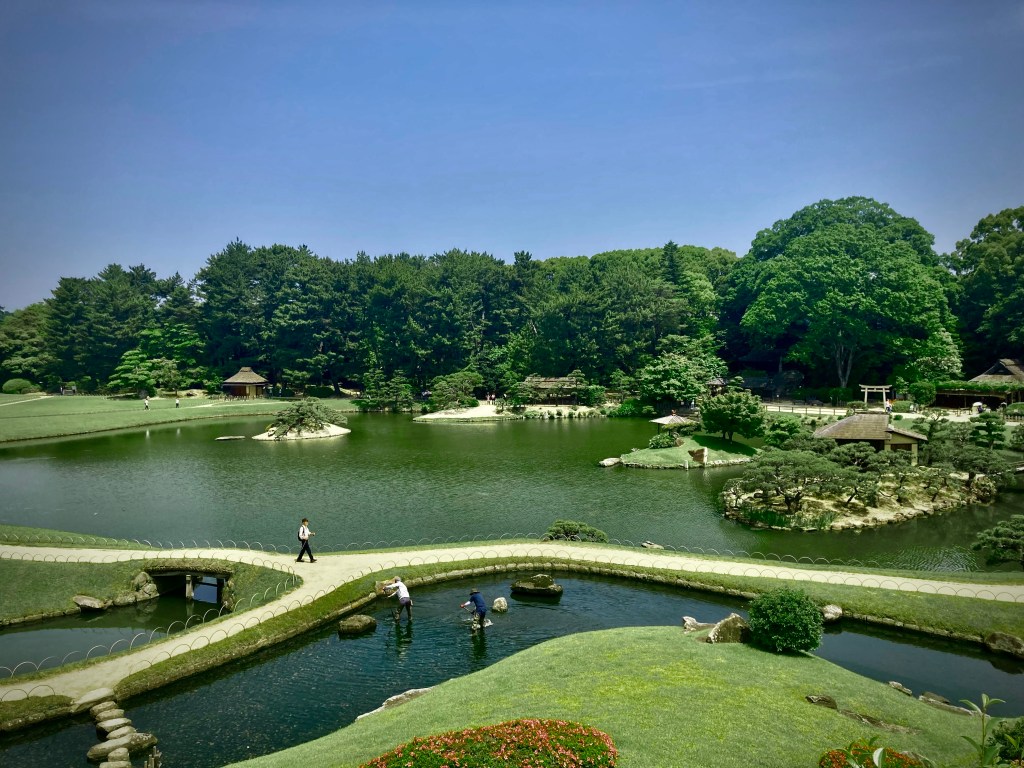
    The second thing: gardens. Japanese gardens were my initial reason for traveling to Japan, as there were a couple when I lived in Seattle and then one when I lived in Durham. I travelled to the crown jewel gardens of Kanazawa (Kenrokuen) and Okayama (Korakuen, which has 3 Michelin stars, incidentally). They deserved every ounce of praise they received. Korakuen was my favorite of the two as its history and use was interesting.

    This is Korakuen in Okayama. It’s my favorite picture of my entire trip.

    The most significant garden I went to, though, was in Hiroshima. It was called Shukkein garden and it bore the history of the atomic bomb. A beautiful garden had regrown. The signs told of a mass grave, as residents headed to the garden after the bomb because they didn’t know where else to go. Images showed devastation and the haunting outline of a bridge that survived.

    My trip is on my mind every day and I can’t wait to go back to Japan.

    family visits: june 2024

    Coming back to the US was a bit of a shock, I had book revisions to manage and family to visit. I went from speaking only a few phrases each day (if any at all) to suddenly communicating at full blast all the time. It was a little overwhelming! I visited all my grandparents in the great state of Michigan before heading home to visit with my in-laws. They had come to visit us in the lovely season in Montana, before the summer heat.

    I enjoyed visiting with everyone and then had to figure out what to do with myself now that I wasn’t planning a trip…

    book revisions: june-july 2024

    My time was carved out in a major overhaul of my book draft for my publisher. The feedback I got on the first draft from my editors was kind but I knew the book was no good. So I stripped it for parts and worked through it at a prose level. I broke down my sentences and explained things as simply as I could. This probably sounds like a no-brainer: it was not how I was taught to write! I had one meeting with an advisor during my dissertation where she helped me break sentences down simply but I forgot that lesson for almost two years until it came time for me to write a book for undergraduates.

    I actually enjoy editing more than writing. It works my puzzle-loving brain a bit more than the generating phase. I also can tell when I’ve edited well. I sent the book back and received an enthusiastic YES from my editor.

    turning 31: august 2024

    Turning 30 was a bit of a crisis for me. I had struggled with intense awareness of mortality as a result of the pandemic and so I worried that turning 31 would be marked by the same feeling that time was running out.

    I had no such feelings and, in fact, I felt lighter. I was able to stretch into my days because, as time passed, I was less and less beholden to the sensation of working constantly. I had a book coming out from a publisher–my life-long dream–and I had all the time in the world to write and lift weights. I had literally nothing to complain about!

    book published: october 14, 2024

    The book came out! A little earlier than expected and I wasn’t quite sure what to do with it. It didn’t help that I would be in Italy by the time my author copies arrived…

    italy: october-november 2024

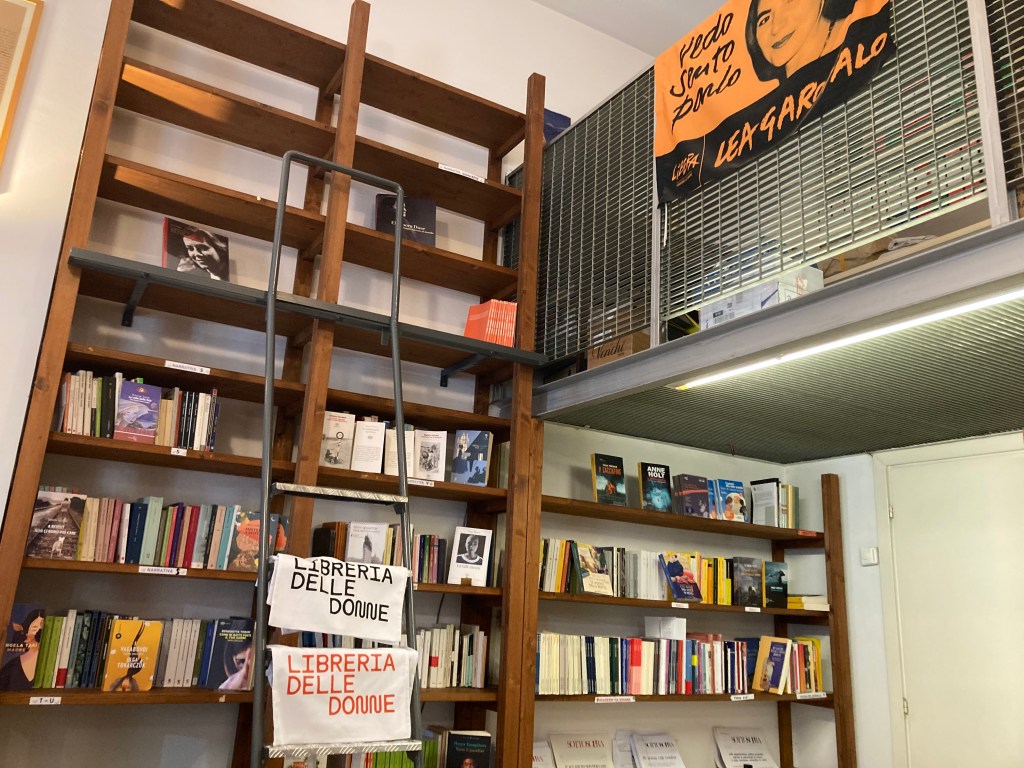
    I planned a second trip, based on my budget, to Italy. I wanted to meet the Milan Women’s Bookstore Collective, a feminist group based in Milan. They, to this day, run a feminist bookshop run by volunteers. Their book, Sexual Difference: A Theory of Social Symbolic Practice, changed my life and thinking when I read it. I don’t talk about it much in the book, University for a Good Woman, but I did write an essay about them for Oh Reader, issue 17 that also came out in October. I packed my bag and headed to Milan.

    The inside of the Libreria delle donne di Milano. I left with an extra copy of Sexual Difference, their journal, and Carla Lonzi’s Taci, Anzi Parla. I should have gotten more!

    In their book, the Milan Women underscore the practice of gratitude between women, acknowledging what you’ve received from others. In my acknowledgements page, I tried to mention everyone I had to be grateful for (inevitably leaving off names, much to my horror). But the Milan Women, for some reason, didn’t make it. So I decided to meet them, give them a copy of my essay and book. My Italian is minimal, but what I found interesting was how passionately they argued and how they managed disagreement. I had never seen such lively political discussion in my life. This sticks with me.

    After my time in Milan, I went to Venice, then Florence, then Rome. It was overwhelming to see so many ruins and so much art. I was amazed by how small Venice and Florence were, the way they evoked older ways of organizing cities. I ate fabulously, though was sick for a lot of my trip. I also felt a lot of pressure to see things: because Italy has such a long history of tourism, there are big feelings about what must seen and how, and I did not enjoy that aspect. I was supposed to spend over a week in Palermo, but cut my trip short because of my illness.

    family visit: november 2024

    I returned to visit my parents and sisters in South Carolina for about a week. It was refreshing to see them, as I had last seen them in January when they hosted me before I moved to Montana. We had a lot of fun and good food while I was there. I miss them all immensely. I unfortunately headed home before Thanksgiving because I was homesick, but I celebrated Thanksgiving with Mountain Man (my partner).

    hot springs: december 2024

    Going to Japan made me appreciate living in Montana a little bit more. I complain about it a lot as a joke, my partner fretting about my unhappiness. But Montana has tons of hot springs! It is basically the closest to the aspect of Japan I will get in all of the US. We are a 30 minute drive from my favorite hot spring, Boulder Hot Springs, which has a clothing-optional women’s only side with both a hot bath and a cold bath. (It is divine.)

    Mountain Man, the dog, and I all trekked up to Hot Springs, MT, a 3-ish hour drive that takes us near Flathead. Hot Springs has a hotel with hot springs pools as well as several smaller “plunges” (the local term) that operate on the honor system. You drop 5 dollars in a box and soak. So cheap! We stayed at Alameda’s Hot Springs Retreat which had its own private soaking tub. It was my first time in a claw-foot bath. The water was sulfurous which was also new for me.

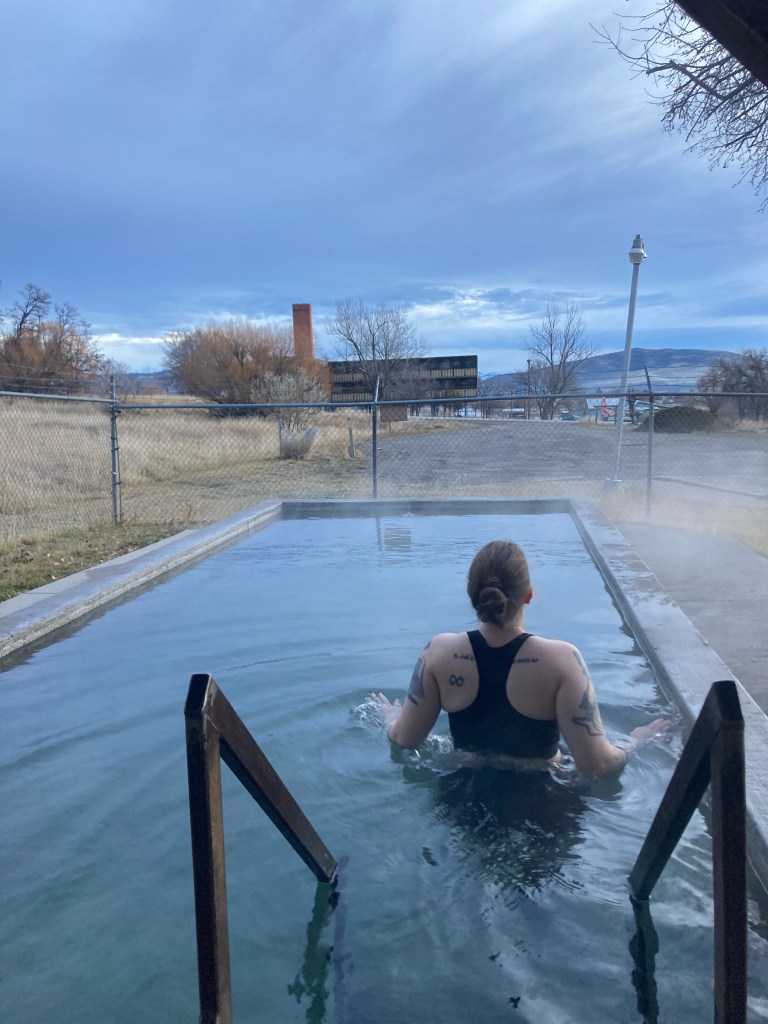
    Me in Rose’s Plunge in Hot Springs, MT. Those are the Camas Bath House Ruins on the left.

    I’m not normally a fan of outdoor baths, but Rose’s Plunge was perfect for two of my soaks while we were in Hot Springs. I hope to go back soon.

    now, 2025

    Admittedly, I had my crises throughout the year where I doubted the wisdom of taking time off; I got rejected for a job I sort of wanted; I also felt like I should leave writing behind entirely. But somehow, I kept going. I’m working on a novel that I’m really excited about: it’s about restaurant workers and inspired by the humor of Terry Pratchett. (Humor is difficult! But I crack myself up sometimes.) I have published a few things this past year which is a 1000% improvement over past years. But I still feel reticent about trying to make a writer of myself. As if I’m blocked somehow.

    But still, I show up to the page every day and meet my goals. I have an essay/review about Carla Lonzi (remember her?) coming out in March and am working on an essay/review about Nanae Aoyama’s A Perfect Day to Be Alone. These are both part of my second nonfiction book project, tentatively titled Women with Issues that collects and refines my criticism about contemporary feminist authors and why their work matters.

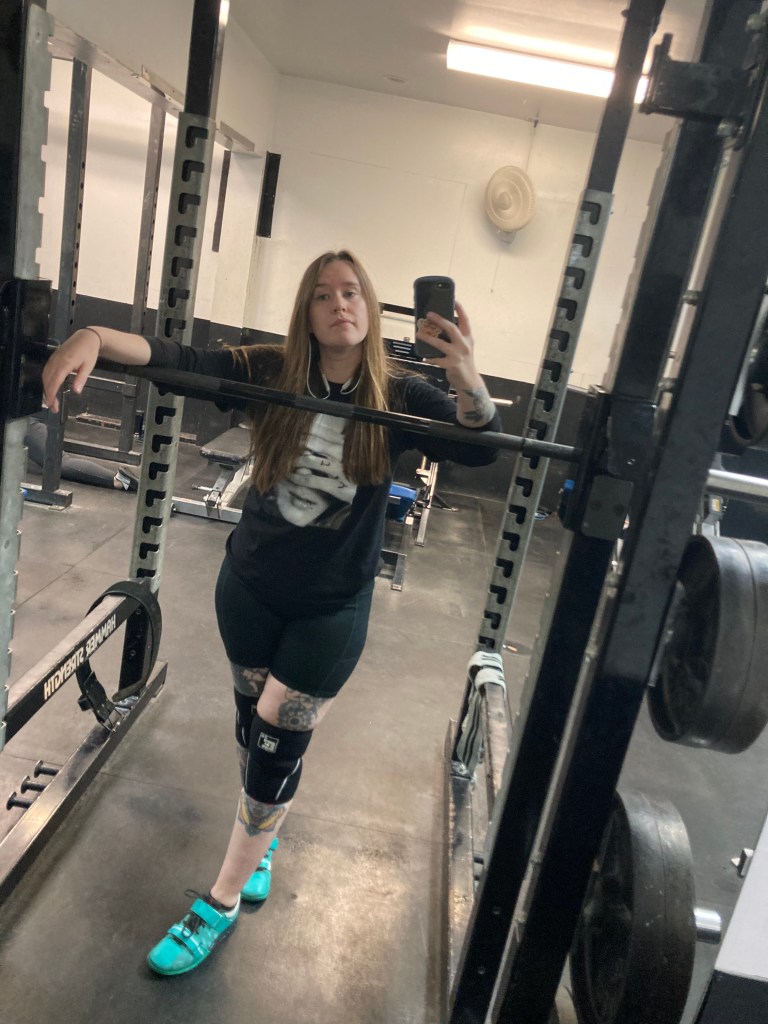
    Finally: thing I did not mention was weightlifting. It has been absolutely central to my mental health. I’m in a block (period of programming, about 10 weeks) where I am hitting previously unheard of numbers for my squat, bench, and deadlift. I am so proud of myself and I feel so good when I leave the gym.

    Tired, need a haircut, but I always love squat day!

    Here’s to heavier weights and weightier dreams in 2025. xo