Tag: anti-work

  • auteurs of the daily

    auteurs of the daily

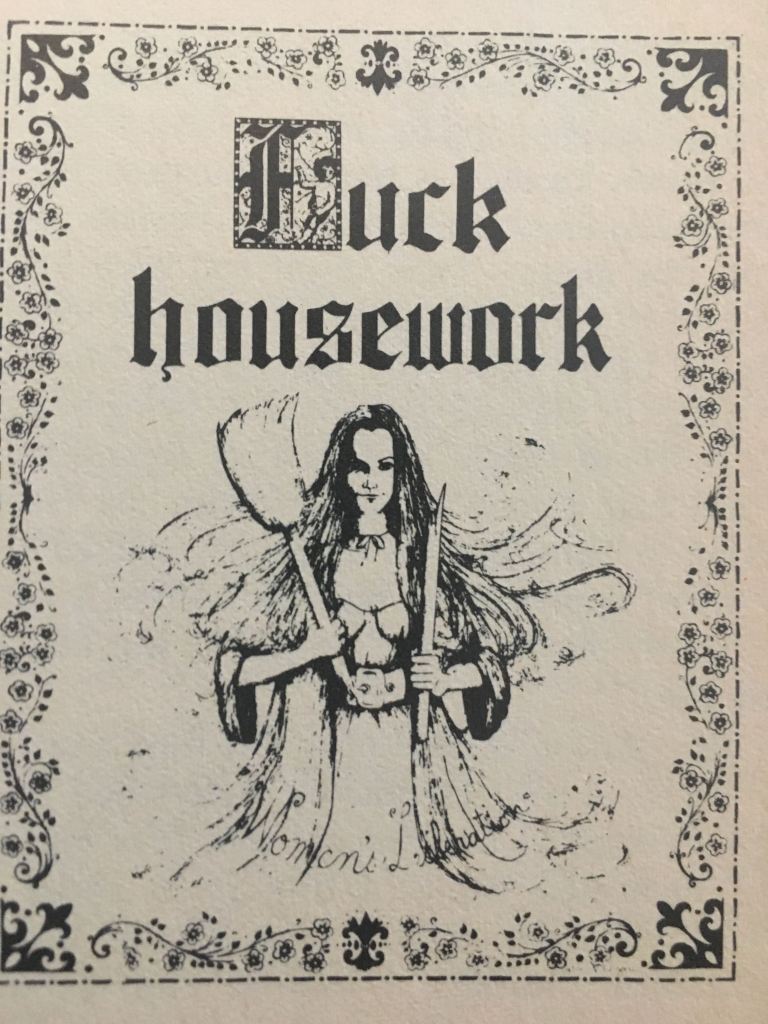
    image from a copy of Feminist Revolution, eds. Redstockings


    At work. I’m supposed to be writing an essay, later to be a powerpoint (that most horrifying of forms), on female freedom, except I can’t write the essay or the presentation because people keep interrupting me. So with my fragmented attention, I scroll through the infinity pool of videos posted by content creators all over the world, looking for videos of women living alone as a kind of research project since I’d recently been tasked with living by and for myself, a sudden change of situation which meant I was naturally curious about what other women were doing. There was something both promising and threatening about this premise. It was as if the sun shone on new possibilities for me in my living while, at the same time, illuminating a void where I had ceased to live at all. In any case, I couldn’t focus on much else besides these videos which required little conscious thought and induced a pleasurable, mind-numbing passivity


    In my search, I found mini-films—untouched even by the likes of Godard or Akerman—in which women recorded their daily lives but their faces were always beyond the camera and their voices absent except in scripted subtitles. These formal choices produced a curiously anonymizing effect, exemplified in the automatic translations that captioned the videos, the automatic part leading to slightly awkward English, jarring the viewer out of total union with the image, such as one line that still makes me laugh to think about, a Japanese woman told us that she was “reliably on the sand,” which makes no sense with or without context (could one be unreliably on the sand?). Yet their voices were unique and theirs. I came to know their preferences and habits, felt a certain sense of style in the compositions. Anyway, it was hypnotizing to watch, even the back-and-forth motion between the images on the screen and the captions describing them, revealing the narrator’s feeling and motivation.  


    I am moved by a logic of democracy as I watch more and more vlogs, because, unlike the paralysis with which I confront a novel or an essay, in these videos there is no hesitation, no doubt that the recording of one’s own life, no matter how ordinary, was worthy in and of itself, there was no conceit that it was the events demanding representation or recording. The form was motivated by the simple fact of being alive. Here I found a craving for witness that had not compelled these women into partnerships and families but drove them, instead, to broadcast their lives and invite in viewers who may be living alone or, even if surrounded with people, living lonely lives. I, like the anonymous millions watching, could now see, through these vlogs, that daily labor, instead of a discipline imposed by others, could be an aesthetic principle, such an aesthetic visible in the precision of the faceless women’s movements, no aspect of life could be too small to garner attention.


                Cleaning ovens
                Cooking dinner
                Taking a walk
                Going to a bookstore
                Making art
                Getting ready for bed
                Doing laundry
    Moisturizing one’s hands


    The calmness with which life is lived within these frames soothed me. A kind of flat affect prevailed, as the feeling subject in this genre is absent from the camera’s view for the most part and the motions are controlled and precise. The choreography betrayed nothing about the feeling subject except her care with the action right in front of her. A thinking subject is only sometimes referenced in language where she appears, as if by divine revelation, in an expression of pleasure, enjoyment, or exasperation but, as quickly as she bursts forth, obscurity takes hold again and we are, instead, left with poetry of action in which the camera records the mundanity, if not the boredom, of daily life and yet, somehow, aestheticizes (I almost said anesthetized) it, leaving me to wonder how she, any of these faceless and voiceless women, feels. Does she truly enjoy the logistical nature of daily living, of reproducing oneself for the next day, replenishing the body after its depletion for work or does she take her camera to the material in order to satirize, to show the emptiness of life as we now receive it, survival stalking our every moment? That either of these could be true, or even true at the same time, is as unsettling as it is dissatisfying.


    Many of these directors, auteurs of the daily, are also workers, but their art does not touch upon their work, instead focusing on their days off in which they have all the time to themselves and which are, supposedly, free of labor, except they are confronted with tasks uncompleted because working requires so much energy and reproduction and, one wonders, whether they consider the filming they do proper labor or if it escapes because it sometimes gives pleasure. The focus on the “day off,” as the title cards for the video often read, suggest the double bind yet again, that these women’s choice of subject-matter is a willful choice, a site of sovereignty, calm, and self-assertion, reminding us, as The Milan Women’s Bookstore Collective wrote decades ago, that even if 90% of my life is not mine, surely the 10% that is gives it all back to me. (The sentence was a declaration and not a question.) but it still seems that work continues in another realm. As much as we may enjoy cooking—well.
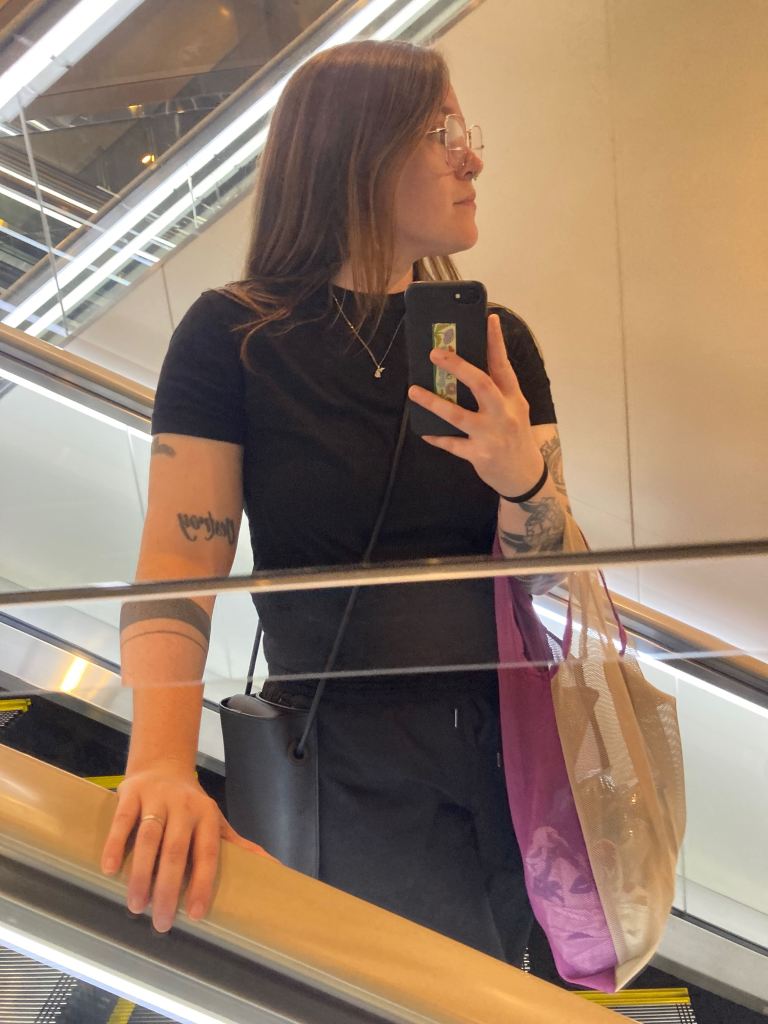
    me on one of my favorite days off ever. in Tokyo. life seems to happen on days off.


    These videos, when I discovered them, finding myself suddenly living alone, had filled a void rapidly growing in the absence of more substantial material (is life not substantial?). I had stopped reading books several months prior. I was unable to read a sentence to its conclusion because I could predict how they would begin and end. I knew the words that would be used, the fictional or rhetorical developments that would be made, the thinly veiled preconceptions of the human and political near deadly in their standardization. The only pleasure books could give me was the pleasure of an impeccably timed eyeroll at the predictability of it all. Overall, I think, I was angry, angry at the cliché and repetition of language, the reification of sensation and experience, and when I tried to leave fiction behind for the more objective genres in the land we call nonfiction, that was no help either: I wasn’t predicting character transformations but argumentative moves and moralistic gestures.


    Was I going mad? Everyone, everyone trafficked in the same language, phrases, and politics, each book an iteration of the last, nothing new, nothing worthy, because apparently everyone agreed on everything (even when they disagreed fundamentally), I mean, didn’t they all have their punctuation arranged the same and didn’t they use the same narrative layering devices and didn’t they produce the same version of self-hood they had acquired to survive? My cynicism was all-encompassing: where once language had excited and compelled me, it now left me dead, motionless, compulsively consuming that which made me ill, simply because there was no outside and I couldn’t make the outside myself because then I wasn’t operating in language but in nonsense. I once submitted this very essay without punctuation because, I felt, it captured how my mind worked and I thought that was interesting but the editors disagreed so now you have all these little black scars everywhere because apparently it’s impolite to not have them.


    Everyone else, after all, uses periods.


    It seemed strange that I took solace in these videos made by women, an art form which seemed to reiterate the problems of the books that made me ill: after all, weren’t they just exposing daily life as the site of deadening repetition from which you could never escape (yes). But weren’t there moments beyond the daily labor, even within it, that overwhelmed me in their beauty, like the caring and incisive motion of slicing a cabbage, hands holding it sturdy on the chopping board, the command over a space of one’s own implied in rearranging furniture, the sound of food frying in a pan which, though their food looked nothing like mine, had the potential to invoke those memoire involontaires that made modernism what it was? So many of these videos were records of food made and spaces cleaned, an attention to the absent and disappearing in daily life, a strange aesthetic principle that existed alongside a depressing reminder of how much life has been reduced to its basics, to mere survival. There was an art of living to the arrangement of one’s food on a platter, just for oneself (and one’s million viewers), a kind of ascetic joy to be found in just the basics, a comfort in the routine of keeping oneself alive because what else is there to do?


    A question hovered that reflected more about me than it did about these women who occasionally became an object of identification: do these women not read, philosophize, create, have thoughts about their lives, is it all just about these repetitions that feminist writers, from Beauvoir and Ernaux, so easily dismissed as alienating? Watching these vlogs, and asking myself these questions in exasperation over and over again, repetition bore its own fruit: I realized the thinking life cannot be captured by the image because it is a negative, it is precisely what is not there even as it may be animating the images of life these women so carefully curate, yes, that’s right, the intellectual part of our lives is precisely what is not accessible to others, and what cannot be captured. A picture of a book one is reading is not the same as the experience of reading that book, of having the words linger in one’s head for a long time after, similarly, a picture of one at a desk writing does nothing to convey the total life that supports such writing or what happened to enable that dedication to oneself and one’s art form, nor could you adequately capture the effects or remnants the thousands of books read and words written and discarded. (Much like the image of cutting a cabbage is not the same as having cut it.) The image, like the word, cannot show what has been jettisoned, the negative space one has to create to think and dwell and be amid a society that clutters one’s head and home, reducing life to consumable experience and to the products that always leave us wanting more of something that isn’t worth wanting, it is then that I truly see in these videos what is not there, the moments that cannot be symbolized: the intellectual and interior lives that will not rise to the level of the image and, in their rebellion, remain outside the grasp of the social.
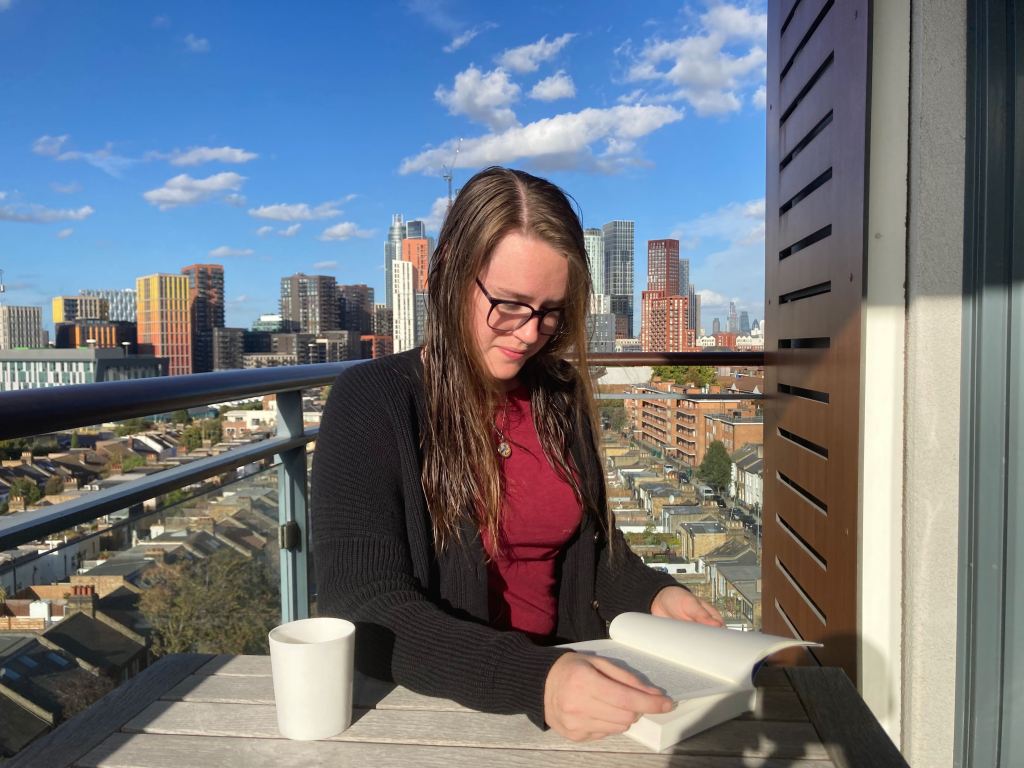
    me, philosophizing, reading. Ernaux’s Getting Lost. Forthcoming: a series of photos with me reading books in foreign countries.


    Watching this reproductive labor, my cynicism swells again until my hand hovers over the red X at the upper left of my screen. But then! The narrator appears elsewhere, no longer confined within the private as the camera hops to a sunset on the water, sand under our director’s feet, the wind blowing on the speakers, the narrator tells us about a feeling of limitlessness in the world, and I think, yes, how on earth could literature ever stand up to this as a means of recording life, of giving us the will to live, I am enraptured and I believe, in my temporary insanity, that words on the page can give us no sensation of sunset, could not make us hear the wind, it could only approximate these things, truly. Even experiments in language and form, designed to excite that part of your brain that searches for similarity and difference, between language and experience, were repetitions of language, not what was real. The longer I spent submerged in the ocean of image, the farther I drifted from my homeland of surfaces, of black ink on white pages. My face became one with the screen, making me faceless like these women, melding my life into theirs, and it was in this way that I passed an entire day of work and missed my bus.


    The day after my disastrous essay attempts and the missed bus, I tried videoing all my actions, with the idea to turn it into a vlog, which, I thought, would be a better version of the novel I was not working on alongside the essay I could not write, since language could only break down motion and thought so far. I wanted to achieve something of the documentarian approach to life these videos suggested, but it was wildly difficult, aiming the camera at every action threw me back into time, every movement Taylorized, broken in its smallest parts to repeated faster and faster, over and over until the gesture reached a stunning perfection at the intersection of speed, efficiency, and ease. None of the takes in these videos that I watched, I realized with a dawning horror as if I were in a film, happen in one go, none of them come out easily and so one must practice even the everyday actions that had seemed so normal and natural but now had turned out to be quite technical and learned. My normal way of cooking was messy and inefficient and would make for a hideous vlog, even leaving aside the fact that the bulb in my kitchen didn’t adequately light the place and part of the kitchen counter was falling off.


    This all came to a head when, on my most precious bagel shop journey (on my day off), I realized that picking up the bagel was not just picking up the bagel, it was interactions with the cashier, gestures to pick the bag up from the counter, a careful checking of the ingredients, an aesthetic shot of said bagel shop, and every action had to be treated this way, so that an hour later I had spent time at the bagel shop simultaneously eating and trying to recreate the experience of eating which produced two realities splitting at the seams. Anyway, an hour later I was exhausted and had wanted a shot of me reentering my apartment, but turning the key in the lock was too difficult as I tried to aim the camera at my hand with the key that my hand kept missing the lock because my attention was split. It was so alienating I became frightened and immediately shut the camera off—it didn’t take me long to realize that creating this blow-by-blow account of a life was unsatisfying for me in its spiritual elements, even if its aesthetic features were somewhat interesting for a viewer.
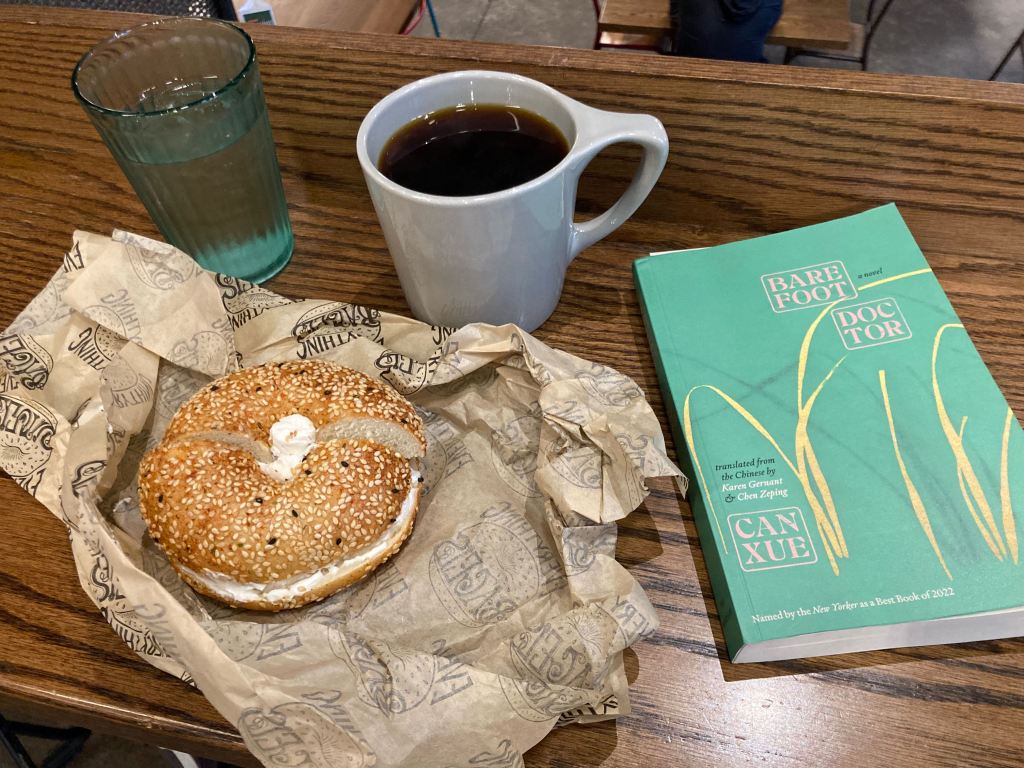
    the bagel in question. (book later abandoned because of tedium.)


    It wasn’t so simple, I realized. Life in its barest elements was probably not worth representing and I could no longer take refuge in the idea that the image was superior to the word. I knew these two thoughts were irreducibly connected. But how? Anyway the image flattens and deadens as much as language, doesn’t it, it’s not so easy to say that either is better except that one conveys a sense of voice and excess while the other reduces us to what can be perceived visually, the firm lines of the body and the clutter of objects members of the same species in this flattened world. These images present themselves as natural and normal but are neither of those things, and it is this that makes the videos suddenly surreal to me.


    No longer could I hide: my fear of language had to be confronted, what it would show me about life, my life? About freedom? I had failed to fully cultivate and sustain my disdain for literature through a traitorous appeal to other art forms and so here I was, exposed, thrown back to my unnatural home in words where the self, split by the social, haunted me (it seemed) with a kinder eye than the grim replication of image and gesture that deviated not at all from reality and yet also existed alongside it. There had to be, I thought, a way of using language so that life could, for a little while, be ignored, and imagination meant that my life did not have to be reduced to its reality, its materiality, to meal cooking and dish washing and apartment cleaning and waiting for days off. I didn’t have to seek a mindless state through the visual capture of day-to-day motions that left me in shards. My mind could be made real and worthy, a subject in its own right, even if only on the page, and even if only briefly, before the dust accumulated and the dishes crusted over. Oblivious to the time passing, I could slip into the ocean of language, surely shark infested, but safe enough for me to submerge and swim, as cunningly as I could to elongate the time before I reached the other shore, floating in waters where, temporarily, the waters suturing my fragmentation.

    puget sound. literal waters of my fragmentation.
  • wanting a different world (or: on dorothy day)

    wanting a different world (or: on dorothy day)

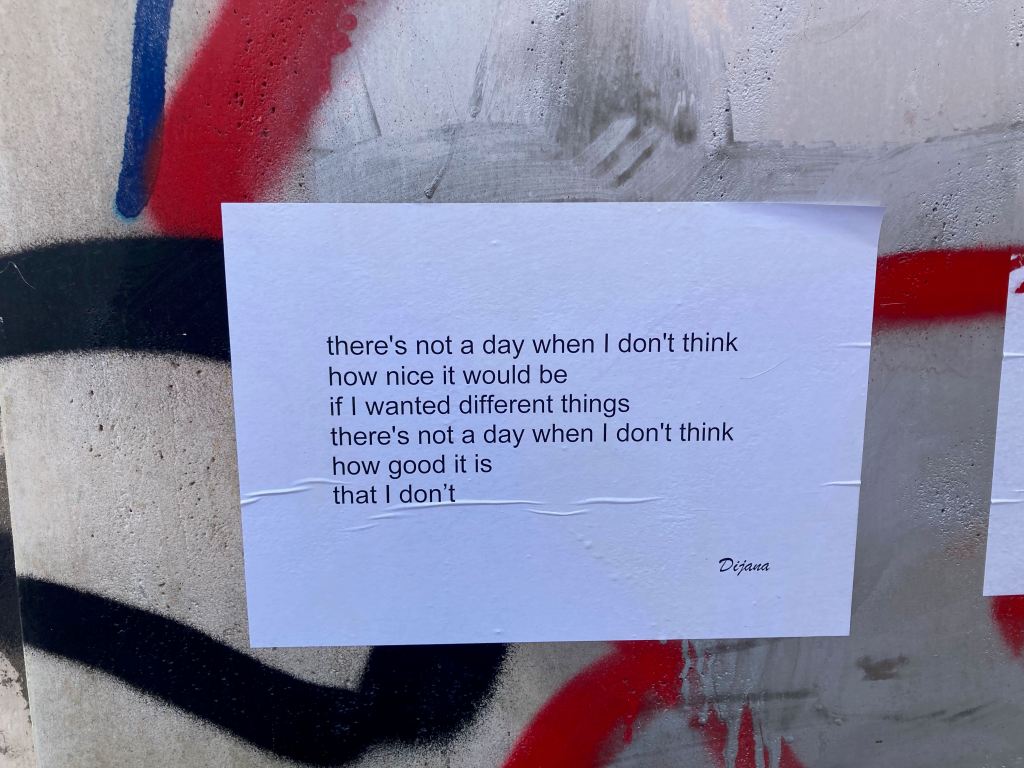
    “There’s not a day when I don’t think/how nice it would be/if I wanted different things/there’s not a day when I don’t think/how good it is/that I don’t.” –Dijana

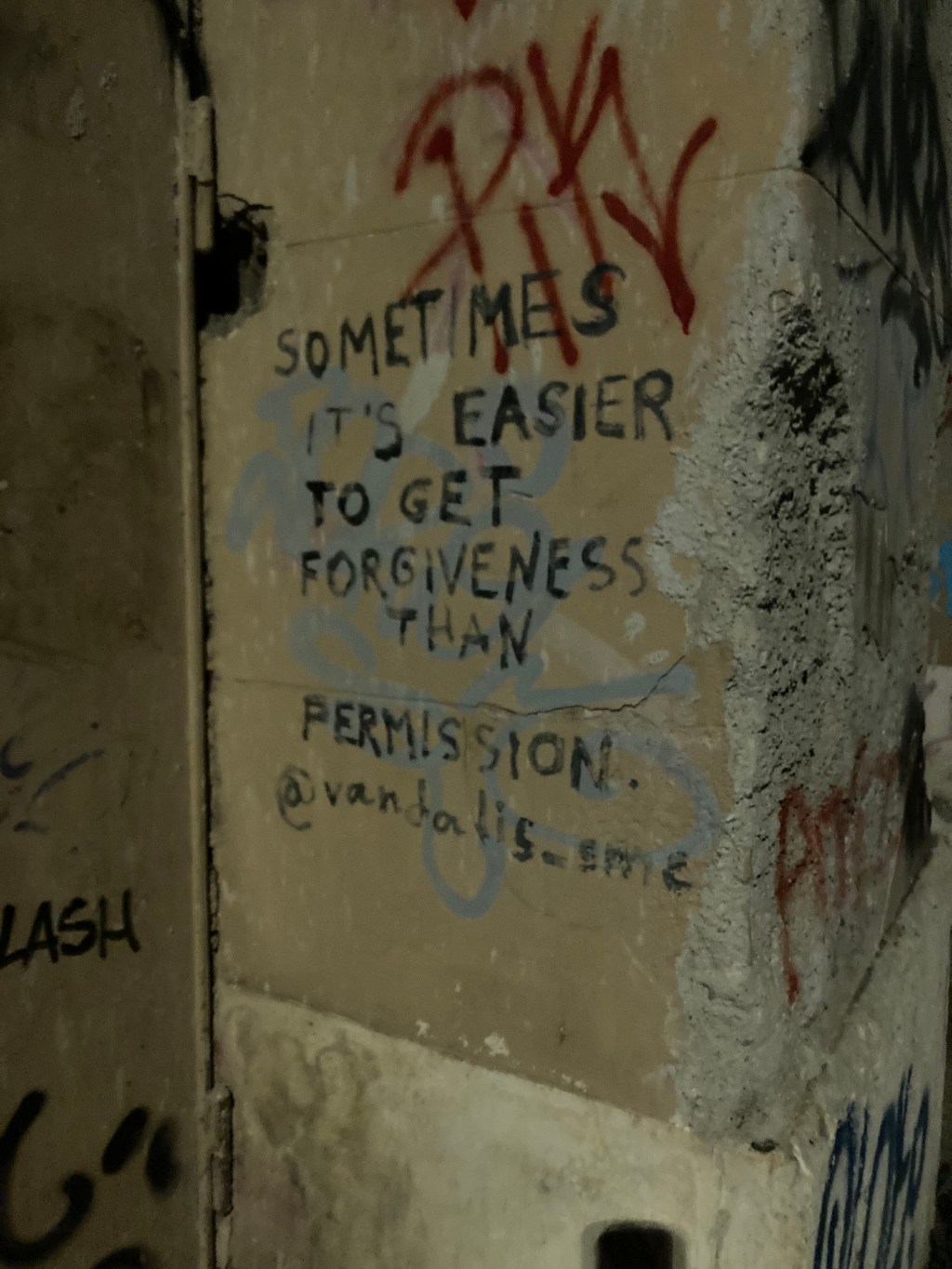
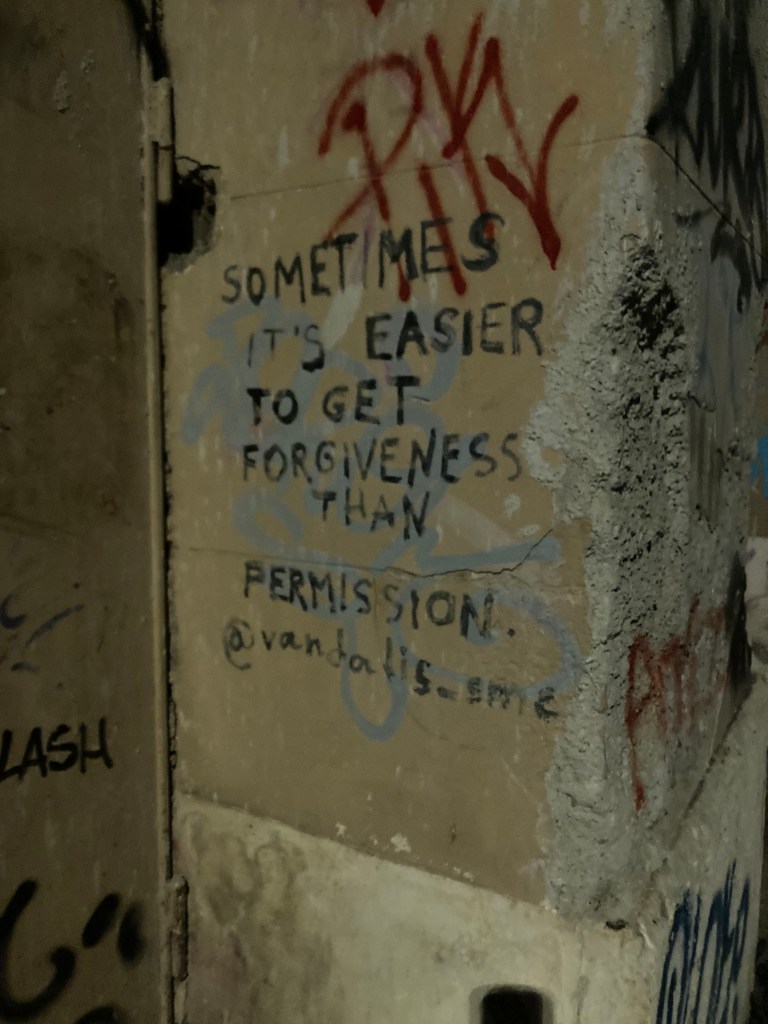
    I started thinking about this in my essay on Perfect Days, which is about the alternative hedonism presented by the movie, a vision of life in which commodities are not the center. This picture of some graffiti from my time in Italy reminded me of a central, difficult question about wanting things and what happens when you want things that are unavailable or not easily acquired by money.

    We can want things, commodities, as they present us with visions of ourselves as cool or complete or as somehow staving off the reality of finitude. I’m talking here about the things we don’t necessarily need or those objects that fill us with rapturous visions of who we could be rather than satisfying, say, our nutritional needs or our spiritual desires. We can also want things that are not things but are really forms of life: like better relationships; clean air; more kindness; health and happiness for our neighbors. But these things cannot be solved by buying things.

    It’s easier to want the thing rather than to want forms of life.

    This is why, as Todd McGowan argues, we in some ways like and want capitalism, because it arises from and satisfies things we as humans struggle with and desire. But like Dijana is saying in my photo, things start to get a little difficult when you stop wanting things and start wanting life. (I’ll refer you back to my blog title; less labor, more life!)

    I’ve been thinking about this even more now, reading the memoirs and diaries of Dorothy Day, having become interested in her as a result of Zena Hitz’s fabulous Lost in Thought: The Hidden Pleasures of Intellectual Life. I have always been drawn to the stories of those who follow the difficult path of living what they believe in. And in our moment, it is more necessary than ever, even though Day may roll her eyes at me saying that. She recognized that all moments in history are crisis; not just ours.

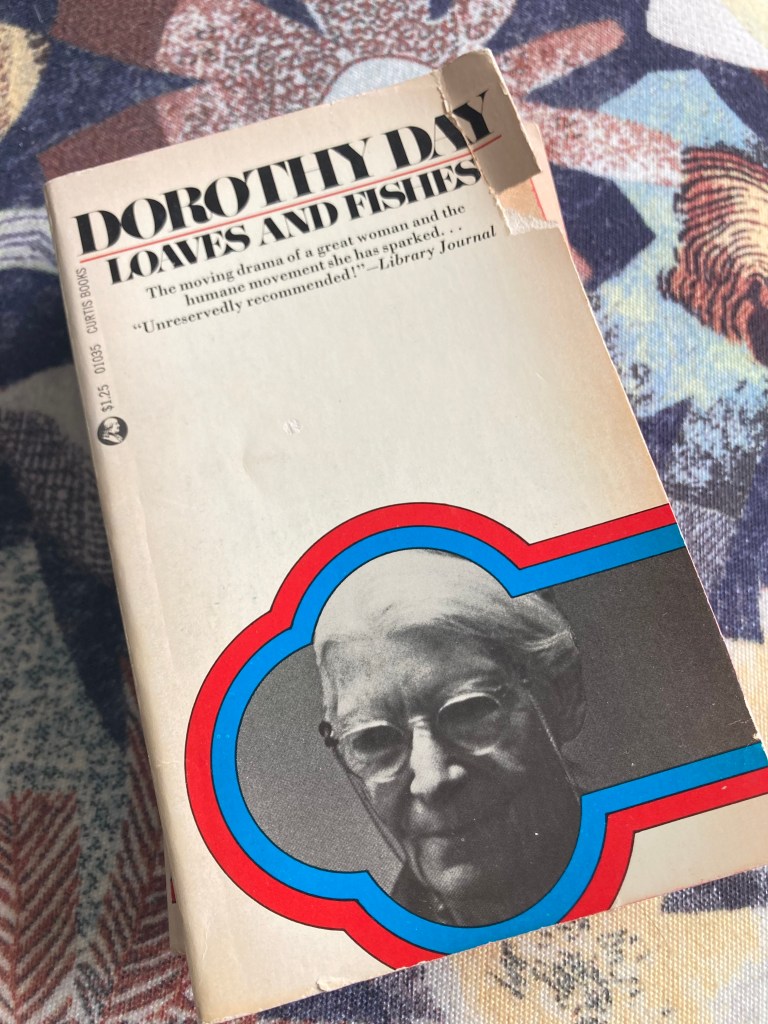
    My battered, Free Little Library copy of Dorothy Day’s Loaves and Fishes.

    The world looks very different if our words and lives come closer into alignment and Dorothy Day’s life demonstrates this powerfully. Her biography is easily accessible, but the two salient details for me are this: that a free, seeking youth lead her to communism and then to Catholicism. Becoming Catholic intensified her commitment to issues of social justice, especially poverty, labor struggles, and anti-war actions. Her life was a practice of living her values fully, in voluntary poverty, caring for the poor, tax refusals, and anti-war protests.

    For instance, Day writes an explanation for refusing to pay income tax in Loaves and Fishes, that clarifies .85 on the dollar pays for the military-industrial complex in the US. That was in 1963 when the book was published; I am afraid to confirm my intuition that this number is much higher. After all, in the US when services are cut, that money is almost always directed toward the death machine. By earning less money and consuming less, as the Catholic Workers set out to do, there can be a reduction in complicity with war.

    The point is not that we all go out and become Dorothy Day; some of us may become like her but Day would encourage us to work with our desires and our skills toward that vision we have and in community with those who sustain us. Catholicism and anti-capitalist, anti-war politics were central to her vision; her skills were writing, speaking, and caring. For example, I loved parts of being a union organizer; mostly I found it wrecked me every day and I did not have the constitution for it. Instead, I write about how wonderful unions can be and will always participate in one should I have the chance.

    This is a principle shared by many of the feminists I read and teach but particularly the Milan Women: following our desire can remake the world. Day emphasized freedom just as much as the Milan Women; it is one of the most compelling aspects of her philosophy. But in a world where our desires are broken and deformed by the market on the one side and the state on the other, what are we supposed to do? How do we find our way forward? I say “we” here because I feel I have been lost in consumer hell myself. I feel like I am becoming aware of how my desires for feminism, love, happiness, community, a better world have been funneled into the only thing available: buying shit!

    Across all her work, Day desired, more than worldly goods, a world in which every person has freedom, dignity, care, food, and housing. I find this single-mindedness, something Zena Hitz wrote about recently, so moving. The Catholic concept of vocation is a powerful one. I am not Catholic, but I still, in my 30s, wonder what my vocation is. What is the thing I am single minded about? Feminism? Labor issues? Writing and teaching as many people as possible to tell their stories? Writing novels and essays? The answer, after all, cannot be answered by a force of will.

    I think many of us wonder how we can use their special gifts in the world–some of us are even still looking for those gifts, doubting them, chasing them away, hiding if they come knocking. We’ve been taught to love other things besides ourselves and each other, something like Dorothy Day’s life (as she tells us) has revealed to me, loud and clear.

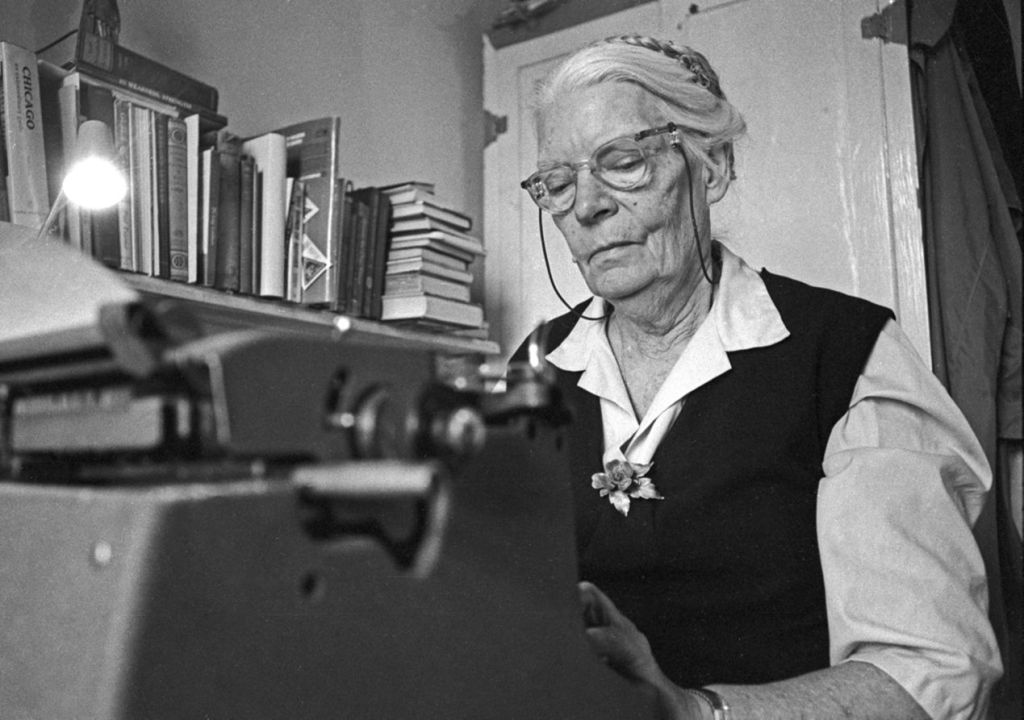
    Day’s life, and her life-writing, were so unique, so powerful, I can feel her coming through the pages of her books. To be that alive, to seek life out in the presence of suffering others, amazes me and reflects my life back to me in unsettling ways. The daily courage her life required, well, encourages me. Dorothy Day did not claim the mantle of feminism for herself, but her picture now belongs in my pantheon of spiritual advisers.

    Day at her typewriter. Credit: Bob Fitch. Source: U.S. Catholic.
  • love & work

    love & work

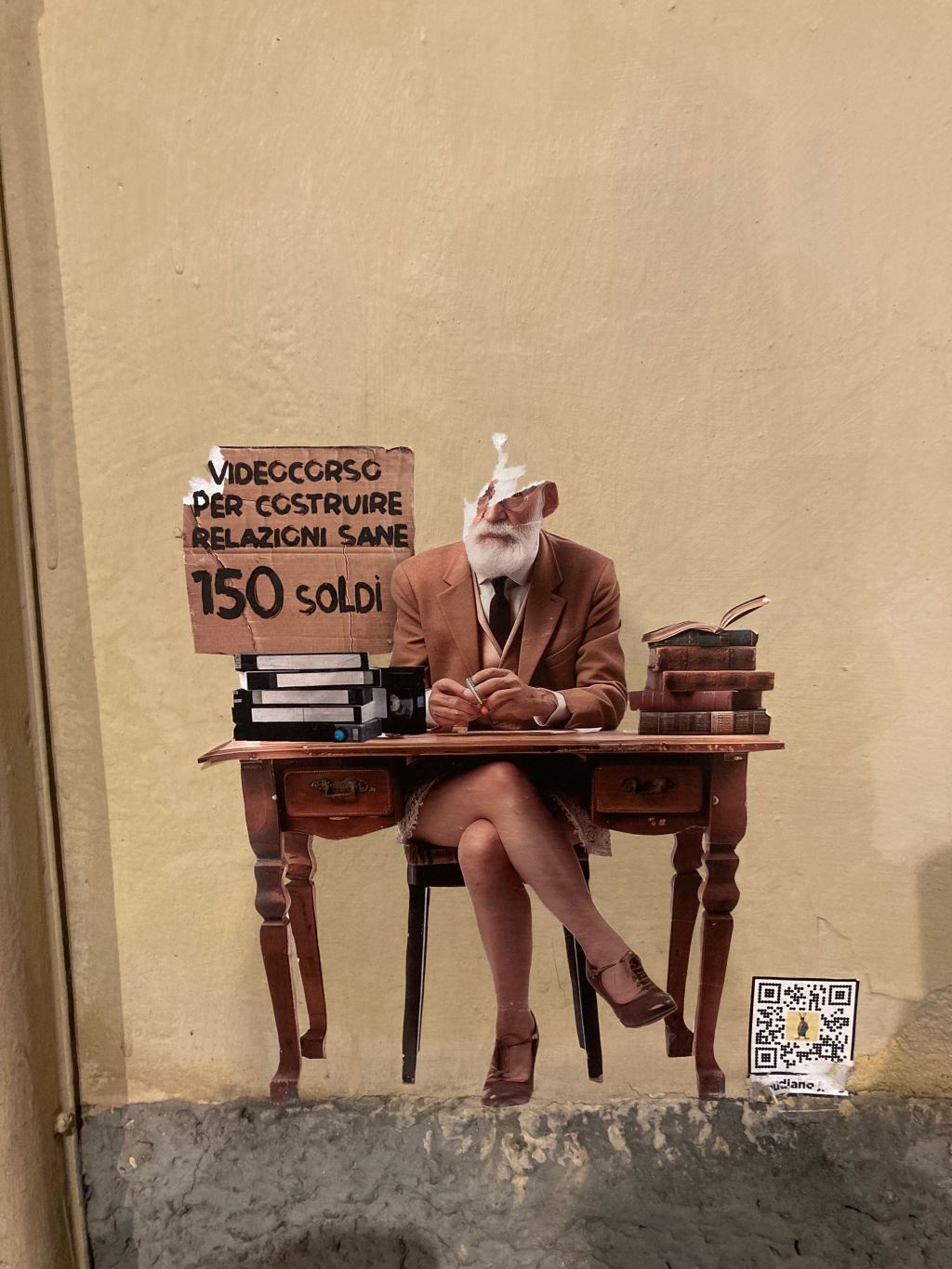
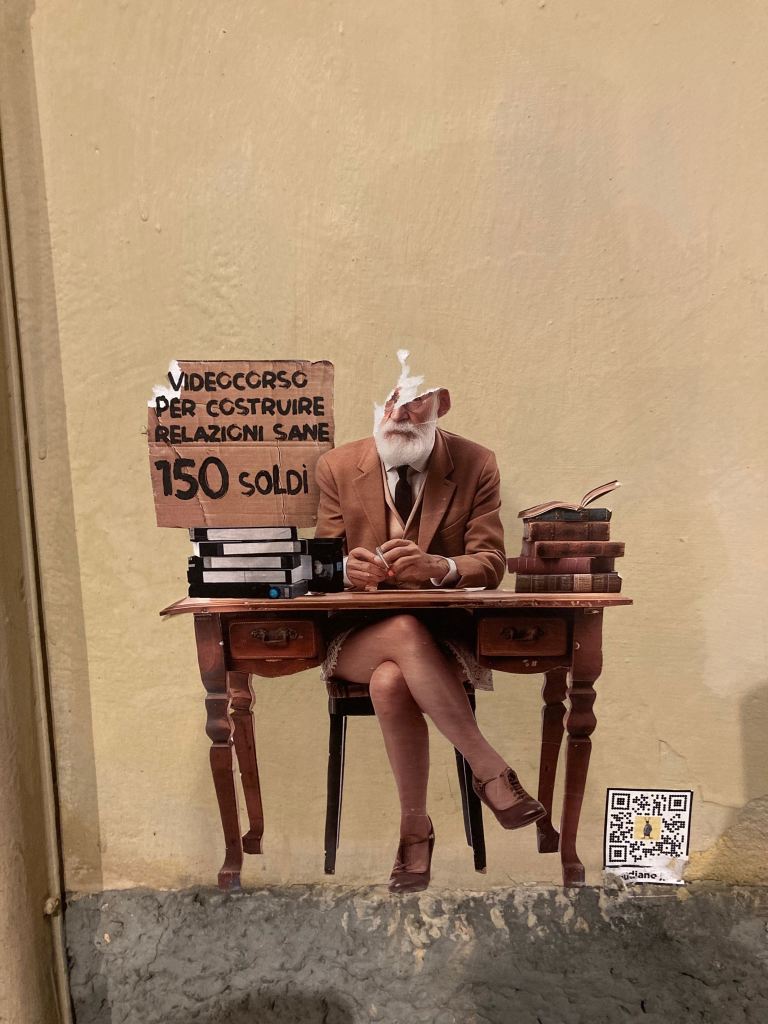
    Graffiti in Florence. “Videocourse for how to construct healthy relationships. 150 dollars.”

    Today my essay on Feminism in Revolt, an edited collection of Carla Lonzi’s work, will come out on Full Stop. I have long been fascinated by Italian feminism, in particular because of the way its writing is often experimental and outside the academic realm. Italian feminism, too, has an entire different universe of concepts unrelated to American feminism which has a hard time thinking past “gender” as a concept, even if it collects a lot of modifiers along the way. It ends up being very monotone and not at all interested in what it means to live and how one might want to do so.

    In my essay on Full Stop, I explore the significance and experimental nature of Lonzi’s writing. She is rarely treated as a writer–only as a critic and feminist. But I think she is an artist, using her life to create new and surprising works. In this post, I’m going to follow a thread that got cut from the essay because it is far more relevant to my blog’s usual themes of living and (not) working. Lonzi’s enactment of feminism, to me, has close ties to an anti-work ethic that many miss if they take her self-narration at face value. Lonzi, at least in the excerpts that we have in English, doesn’t necessary use the language of the anti-work left, which has a strong presence in Italian leftist thought.

    In teaching Lonzi for the first time, I was reminded of how distant Italian feminism is and how useful it is to give some context. Lonzi lived from 1931-1982 and was the cofounder of a group of Italian feminists called Rivolta Feminile. The group experimented with different kinds of consciousness-raising as a way to extract themselves from what they saw as a male-dominated culture. This culture had little respect for different ways of being or living, and its subjectivity was often geared toward profit and the harm of others. One of the key aspects of Rivolta Feminile, like that of the Milan Women’s Bookstore Collective’s philosophy, was that developing autonomous relationships between women was a valid political practice that could create different kinds of freedom. Freedom is often what we see Lonzi searching for in her writing, though she called it “authenticity.”

    Her first book, Autoritratto, or Autoportrait, is a collage of interviews she did with mostly male artists and one woman artist who was also involved with Rivolta Feminile, Carla Accardi. The book is not very enjoyable, in my opinion, but it does mark the end of her career as an art critic. What concerned Lonzi about art-making was the way it destroyed relationships. The language of her critique came from a feminist perspective, of course, critiquing the figure of a male artist’s autonomous subjectivity forsaking the real background that enables and produces him. This would include any women that reproduce his labor. Lonzi also tires of being the critic in that it puts her in service of the art and art world rather than her own subjectivity. In other words, she had to submit her subjectivity to a commodity, even if a special kind of commodity, and that she found intolerable. Refusing the exploitation, she left art criticism altogether.

    She affected a similar kind of leaving with the publication of Vai Pure, a dialogue with her long-term partner, the artist Pietro Consagro. The book is transcription of video recordings that Lonzi took of their final argument. It is, quite frankly, an amazing document. Using her personal experience, Lonzi shines a light on conflicts in relationships that seem universal: the lack of understanding, a lack of gratitude, and a lack of care. But in the context of feminism, this argument takes on a heightened significance as Lonzi is struggling to live out feminism in her day-to-day life with a man she feels does not appropriately appreciate her. Vai Pure is often very funny as Pietro demands examples from Carla as she lists her grievances and as Carla struggles to explain to him the stress of trying to be a feminist while also being partner to a man who doesn’t seem to care a whole lot about feminism.

    Within the written work Pietro publishes he does not (to her mind) acknowledge her role in his art sufficiently. Instead, his work operates on a liberal assumption: “Everyone creates an image of himself, a resumé, grants himself himself his preferred identity” while everyone in his liberal circle, clinging to the “abstract originality of the individual,” consents to the idea that ‘I don’t talk about you, you don’t talk about me” (246). This is an insane basis for art, let alone society. In reproducing the abstract individual who sells his labor willingly and freely (note the language of resume here), Lonzi accuses Pietro of colluding in capitalist subjectivity.

    If that point seems a little, well, abstract, there’s another critique that Lonzi makes which seems even more heartbreaking in its universality and simplicity. Keep in mind that Consagra is an artist, an original freelancer who has some control over his labor. In a translated excerpt of Vai Pure not included in Feminism in Revolt, Lonzi delivers a huge blow:

    I don’t know how to name it. We eat lunch with the feeling that you have to go to the studio, you come back in the evening with the feeling that you must recharge your batteries and in the morning you are off to the studio again … Even when we are at Elba Island [on holiday], you don’t want to go climbing on the rocks, because you want to work on a drawing, on a project, on something, and you accuse me of stealing time from your work. You give me the remainder of your time in the afternoon. We don’t walk around the island, we don’t take walks, we meet people only and exclusively for work, we have restricted the world for ourselves to the people that are interested in your work, whoever they are, clever people or idiots, but it is the work that counts. You must understand that our whole life is structured by work, all of it, that we are never together for ourselves. It’s just a pause, a rest from work. The vital, conscious, and active moment, the promised land is work … You don’t have a schedule, you don’t have a job, you don’t have obligations, but you create a more constraining situation than if you had a job and a boss. (Excerpt translated by Claire Fontaine, in e-flux.)

    Even the artist lives his whole life around work, making time for his partner rather than living his life and making his art an accessory to it. Lonzi has no patience for this; it hurts her deeply to come second to Consagra’s art process.

    Lonzi estranges us from the typical vision of art as an expression of human greatness or creativity. From the perspective of relationships, art is an inhuman process, merely an extension of capitalist production, if a highly specialized one. It is no different than other forms of labor for pay, it just arrogates prestige to itself.

    Lonzi’s entire oeuvre is dedicated to the question: what kind of art can we make if we are unwilling to destroy our lives and relationships? While it’s true that art might outlast us, do we really want to live our lives as if we are already dead?

  • My Career Break

    My Career Break

    Graffiti I saw in Rome on my way to the airport.

    We’re all fed up with work.

    It’s a mood, a structure of feeling, that all of us look at waged work and think, “yuck.” But it’s difficult to act on that mood. Who can really leave work behind? I think of Rental Person Who Does Nothing and the anonymous author of “Tang Ping,” Luo Huazhong, who works two months a year and has monthly costs of 200 yuan. Both of them left work behind, but in different ways.

    I, too, was fed up with work. It was somehow both soul-crushingly boring and kept me just busy enough that I stressed constantly. I needed an off-ramp, quickly. My partner had just taken a year to get a degree and leave customer service work entirely. He finished his degree and got a job in Montana, one that would cover rent entirely. Our roles swapped: I would quit my own job. I turned in my notice, moved out of the North Carolina apartment, and flew to Montana after a couple of months.

    There was very little information about taking a career break when I started, with the exception of Julie de Vivre’s archive (which I highly recommend). I read about travel writers who were digital nomads but had financed themselves through sold houses and in demand careers. This, obviously, was not an option for me. I read about people who lived in communities that helped them reduce their spending considerably and so their career breaks were “permanent.” These people invariably had gardens that required a lot of work. I read about someone who cashed out $190,000 in savings. I read about Luo Huazhong and his 200 yuan a day and knew I could never do that, either.

    But I did think I could manage a year on what I had saved without being wealthy, gardening or eating tofu and rice for every meal. It turns out I was right, thanks to my partner covering rent when I was in Montana. (I could have contributed toward rent, but he refused.) I covered all my other expenses which included travel to Japan and Italy, as well as travels to see my family. (Recapped here.)

    As of right now, I have about $10,000 of the $24,000 that I started with. My one-year mark will be on March 31, 2025. I’m being transparent about this because, before I started, I felt doomed to work forever, parceling out my time in 1-2 week stints of vacation time that feels so oppressive. I used to think you had to be wealthy to take this much time off of work. But it’s more about assessing how much you need to live on and how much you’re willing to give up for the freedom.

    I haven’t been entirely work free. I finished writing my book (though I haven’t received any money from it) and taught a couple of classes at Hugo House for Writers in the past year. I have done free book reviewing for a few sites I admire. I published a couple of paid essays. I have also been working on multiple book projects that I enjoy and hope to publish in the next year or so. These are all things I have enjoyed doing and took on willingly. Taking a break from work let me focus on things I really enjoy instead of having to cram those things into the tired hours around a commute and office stay. I used to have a 1.5 hour commute (1 hour if the traffic wasn’t bad) each way to work, meaning I went to the gym at 5 AM to ensure I fit it in, and then had to work 8 to 5. I would get home after 6 and have no energy for loving on my mammals, my partner and our two dogs, or for doing things I wanted to. I was completely drained.

    Consider my day now. I start each day with coffee and work on one or more of my writing projects. My partner gets up and one of us makes a second cup of coffee for all. (Even the dog. Kidding!) Then I go to the gym, come home, take care of the dog, and make my lunch. After lunch, I do some household stuff, then I take a nap, especially if my gym session is particularly heavy. Then I’ll study one of my two languages, Italian or Japanese. I make dinner some nights, my partner makes dinner the other nights. TV before bed. And then I start all over again. On a week to week basis, my partner and I go to the hot springs in nearby Boulder. That’s our big adventure. If this sounds at all boring to you, rest assured, this is the perfect life for me. It is a nourishing routine, doing things I love, and not having to suffer 8 hours a day for someone else’s profit.

    My initial concern about taking a career break was money. How would I survive!? But now my concern is: how can I go back to work after this unparalleled stint of freedom? How will I survive having to crush myself down small again to fit into a work environment?

    In reading about career breaks and their endings, the key is to learn how to “sell” your time off to employers as a bonus. This means thinking of your career break as a time in which you gained skills that you can sell in the marketplace. Apparently, my Japan trip wasn’t an enjoyable encounter with a culture that has long fascinated me but an upskilling in intercultural exchange and soft peoples kills. This annoys me. Not everything we do, as humans, needs to be folded into work or seen as job training.

    My time off, frankly, isn’t an employer’s business. It is deeply disturbing to me that, as a culture, we give so much power to prospective employers who can demand information at will and whose power deforms us into performing creatures who will do anything for money. This is an unfreedom: it means people live their entire lives around an imaginary figure’s expectations rather than their own desires. For example, career guides recommend, in the strongest terms, that you make sure your blog is employer friendly. Don’t write anything to upset them or make them think you won’t be a good worker. You don’t, then, even have free speech in your own time; not really. Elizabeth Anderson argues in Private Government: How Employers Rule Our Lives that employers govern our lives in way that are far more insidious and damaging than some forms of state control.

    So that finds me here, on a snowy February morning, thinking about what my career break has meant to me. And I think it has, ultimately, meant reclaiming a kind of freedom. It has given me time to recover myself beyond the status of “worker.” It has also helped me recover pleasure in activities that began to feel like obligations. Writing, for example. Whether this career break becomes permanent, when I leave the career ladder for a different relationship to work, or is just a pause, I don’t know. But I’m sure I’ll see you back in the life of waged labor soon enough.