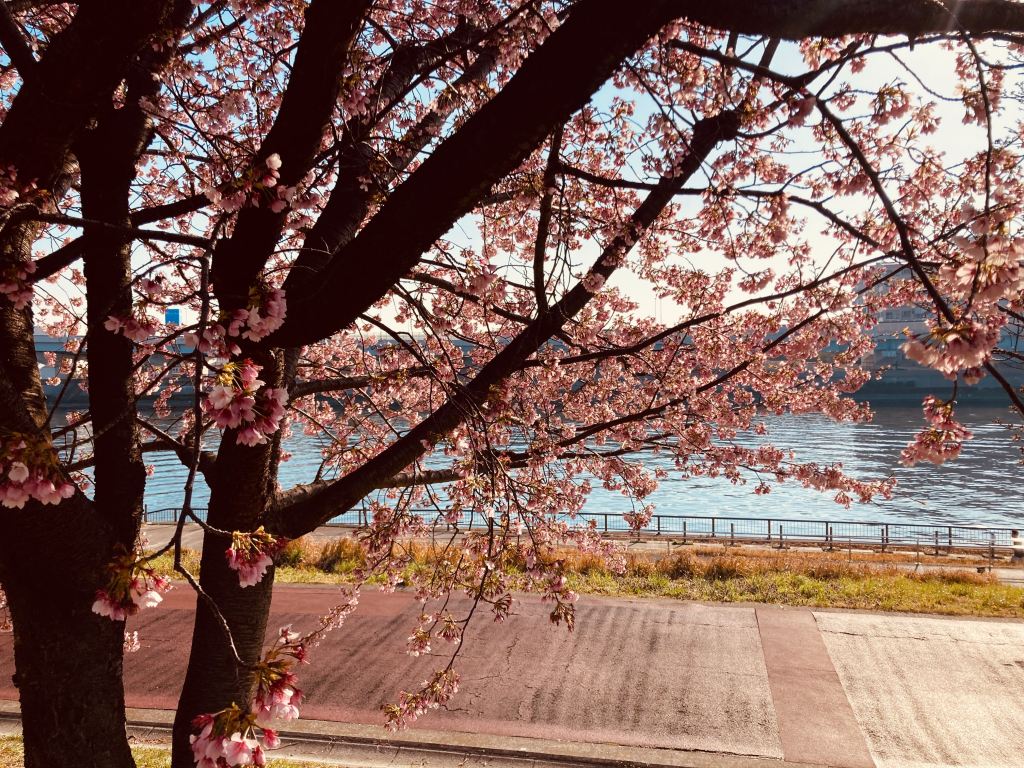
I spent last week in Tokyo, soaking in the cherry and plum blossoms, as well as the public baths. I rested in gardens and hurried to catch the packed subway trains. I wandered along rivers and sat in cafes watching people go by.
It was my last stretch of time without having to report to a job, though the job loomed at the end, quite like it might when you take a “normal” vacation. There’s always a sense of finite time. My experience of Tokyo this time was less full of possibility and more bittersweet than it was a year ago, precisely for that reason.
But I loved my time there, just as I did the first time. I loved the unfamiliar sounds, both the songs and language. I now live in a small town (it calls itself a city, but I beg to differ) and so I do not hear the clatter of train cars or the announcers’ voices or the mix of many languages at any given time. So many different people come to Tokyo from all over the world, even from within Japan itself, so there’s also a real diversity of people moving through the city.
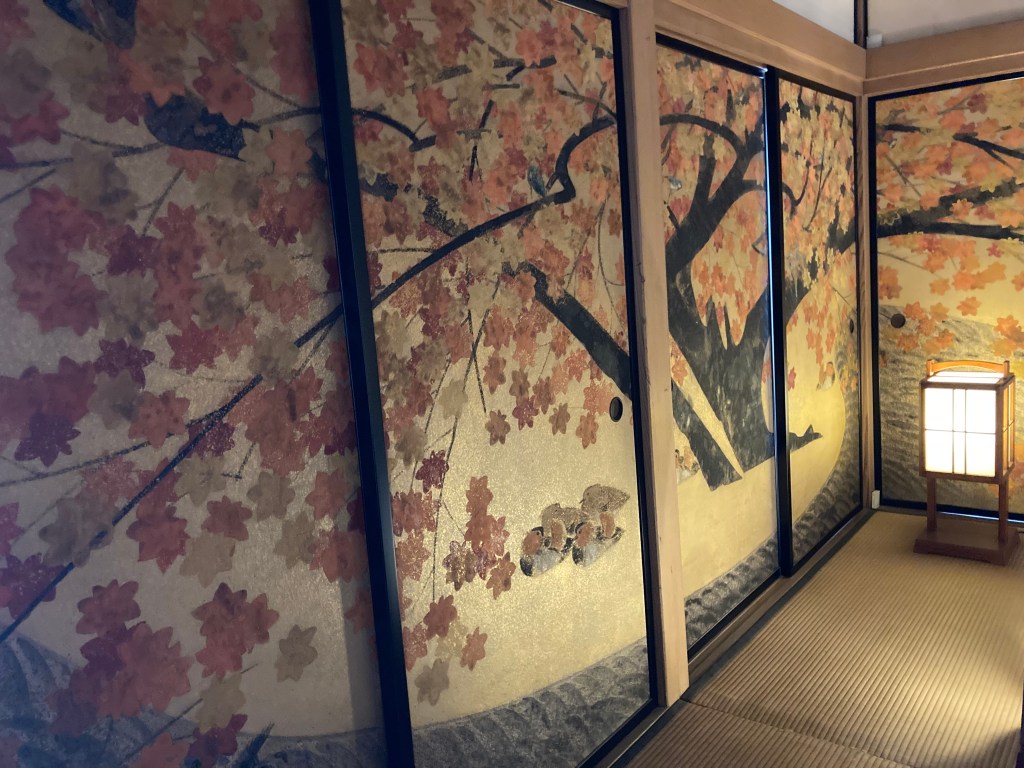
I visited my third crown jewel garden, Kairakuen in Mito, about a two hour train ride from Tokyo. The garden’s name references a particular kind of pleasure and ease. This philosophical aspect of the garden felt like a natural conclusion to my time off, as both were something I thought in sustainable and nourishing forms. Much of the pleasure we have access to on a daily basis is not…healthy? It’s at least not sustainable, as we try to consume our way out of loneliness and mortality and lovelessness and anger. Instead, Kairakuen was a place for everyone to retreat to rest in the beauty of the plum trees and the exceptionally beautiful Koubountei, a three floor residence with rooms painted in different designs. Kairakuen, of the three crown jewels, was always treated as a public space rather than the domain of the wealthy.
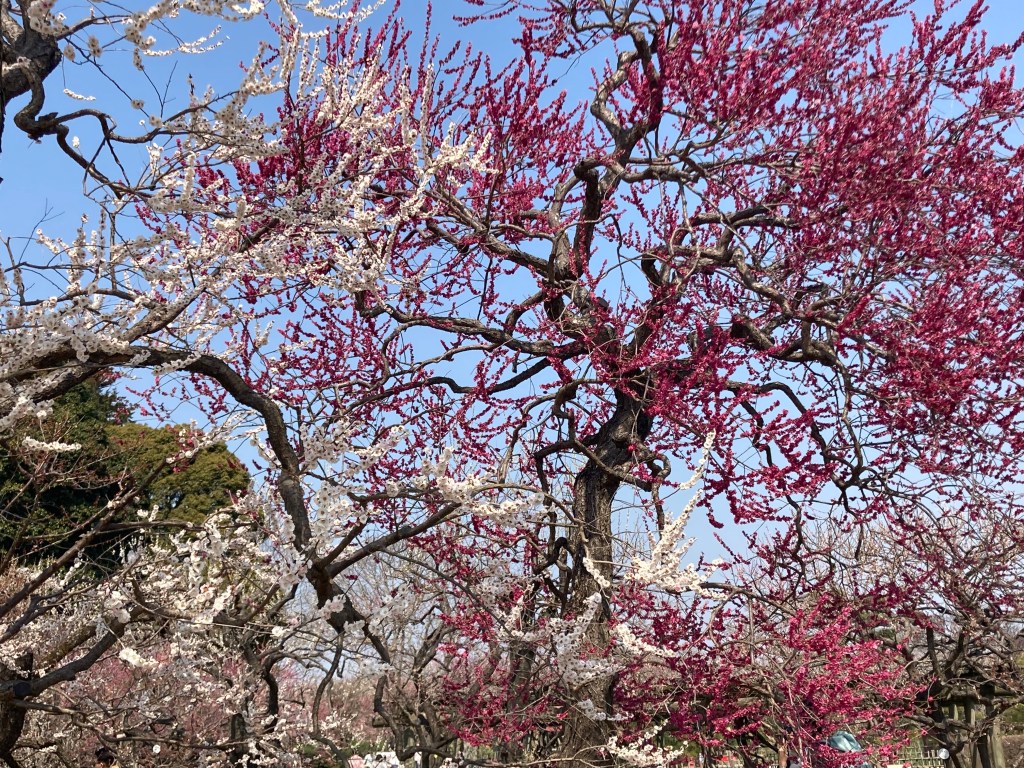
The plum trees were still in bloom, so I wandered the plum grove multiple times, breathing in the scent of the trees. Photos can never capture smell and they fade from memory, only to be evoked in surprising ways later. (Proust taught us this, I suppose.) I was acutely aware of the impermanent nature of smell as I sat beneath the blossoms, enjoying my onigiri for the day. I enjoyed watching people show each other the blossoms, snatches of Japanese conversation floating toward me and away.
I think the Japanese acknowledgement of the shaping relationship between people and nature is sound, much more sound than the culture I come from which views nature as valuable only for resource extraction or feelings of sublimity (these two things may be related). The Japanese garden is sometimes derided as being artificial to which the Japanese respond, rather sensibly, with “well…yeah.” Men cannot make mountains, though, in my country, they work very hard to destroy them. But in a Japanese garden, men can create mountains. Mountains can be made with carefully placed stones that evoke legend and symbolism. Ponds can stand for lakes, and the barest of fields suddenly becomes the plains. The Japanese gardens are worlds created to satisfy a need for beauty and one that engages all of our senses and faculties.
Imagination is where beauty begins.
I haven’t been working on any writing in the last two weeks, even this blog was a casualty of my travels and my job starting. But this problem of imagination and beauty, of how we restore our souls, especially when we don’t have money or means, interests me very much. That problem of restoration and beauty is the center of a story I’ve been working on for a couple of years about tiredness, inspired by Byung-Chul Han’s The Burnout Society. (That book actually saved my life.) Maybe I’ll get back to it since I’ve returned from trip, full of sustaining images and memories to get me through the workday.
 Kaelie Giffel
Leave a comment